

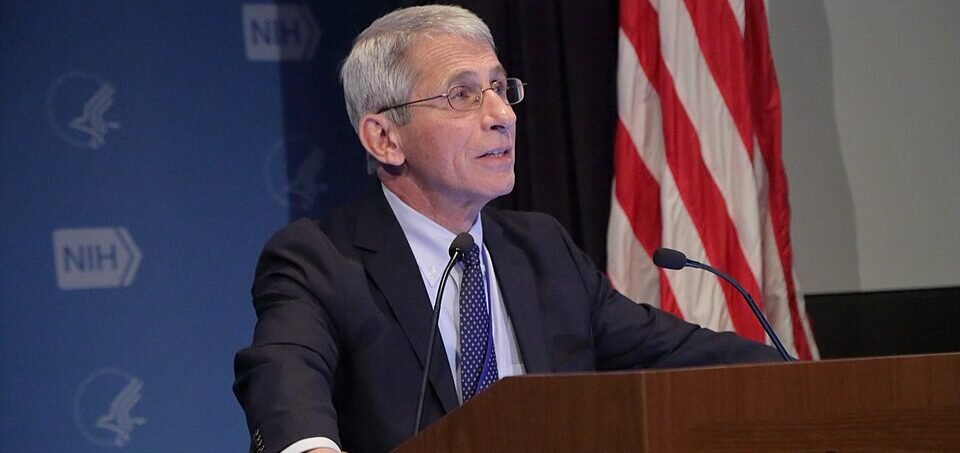
For millions of conservatives, the moment was about more than one witness declining to answer questions. It symbolized a broader frustration with a federal bureaucracy that, in their view, has too often escaped meaningful accountability.
Senator Rand Paul, who has spent years pressing Fauci on issues ranging from federal research funding to the origins of COVID-19, led the hearing before the Senate Homeland Security and Governmental Affairs Committee. Paul argued that the American people deserve answers about how taxpayer dollars were spent and whether federal agencies exercised sufficient oversight over research conducted overseas.
Rather than engaging with the committee’s questions, Fauci—acting on the advice of his attorneys—repeatedly invoked his constitutional right against self-incrimination.
The Fifth Amendment is a constitutional protection available to every American, and exercising that right does not establish guilt. But politically, the optics were impossible to ignore. Many Americans expected explanations after years of lockdowns, mandates, school closures, and economic disruption. Instead, they witnessed silence.
Conservatives have long argued that Washington has developed a culture where powerful officials rarely face the same scrutiny as ordinary citizens. Whether discussing intelligence agencies, federal regulators, or public health institutions, many Republicans believe bureaucracies have become increasingly insulated from congressional oversight.
That concern was central to Senator Paul’s questioning.
Throughout the hearing, Paul attempted to explore issues surrounding grants connected to research involving the Wuhan Institute of Virology, the federal government’s oversight of high-risk biological research, and the scope of the broad pardon reportedly issued to Fauci during the final days of President Joe Biden’s administration.
Fauci declined to answer those questions.
For supporters of President Donald Trump, the hearing reinforced a message they have repeated for years: transparency should never depend on who holds power.
The Trump movement has consistently argued that government institutions should answer to taxpayers rather than protect themselves through layers of bureaucracy and legal maneuvering. Whether examining pandemic policy, border security, or federal spending, the America First philosophy emphasizes public accountability over institutional preservation.
Many conservatives also point to the broader debate over COVID-19’s origins. While scientists remain divided, several U.S. government agencies have assessed that a laboratory-related incident is a plausible explanation, while others continue to support a natural-origin hypothesis or state that available evidence remains inconclusive. That continuing uncertainty has only strengthened calls for additional oversight and public disclosure.
Questions surrounding federal research funding have likewise remained a subject of congressional interest.
Americans deserve confidence that taxpayer dollars are being used responsibly and that appropriate safeguards exist whenever potentially dangerous research receives public funding. Regardless of political affiliation, transparency should not be viewed as partisan.
The hearing also highlighted the importance of congressional oversight itself.
Congress possesses constitutional authority to investigate executive branch activities on behalf of the American people. That oversight function becomes even more significant when public trust in institutions has declined.
For many Republicans, restoring that trust requires more than reports and press conferences. It requires direct answers from the officials who shaped some of the most consequential decisions in modern American history.
The pandemic changed the lives of virtually every American family. Businesses closed. Churches shut their doors. Children lost classroom instruction. Millions faced unprecedented restrictions on daily life.
Given that history, asking questions is not an act of political revenge. It is a legitimate responsibility of elected representatives.
Reasonable people can disagree about the decisions made during the pandemic. They can also disagree about whether every policy was justified based on the information available at the time.
What should not be controversial is the principle that government officials remain accountable to the citizens they serve.
President Trump frequently argued that “the American people deserve the truth.” His supporters believe that principle remains just as relevant today.
Whether future hearings ultimately produce new evidence or simply raise additional questions, one thing is clear: public confidence is strengthened by openness, not secrecy.
Americans expect accountability from every level of government. Conservatives argue that standard should apply equally to cabinet secretaries, agency directors, career bureaucrats, and every public official entrusted with taxpayer resources.
The debate surrounding COVID-19 is unlikely to end anytime soon. But if there is one lesson that should unite Americans across political lines, it is this: transparency is not a partisan value—it is a democratic one.
The questions surrounding pandemic-era decisions will continue to be debated. Many Republicans believe those questions should continue to be asked until the American people receive clear, complete, and credible answers.
About Republican Column: At Republican Column, we bring you breaking U.S. news, politics, and global developments every day to keep you informed.