

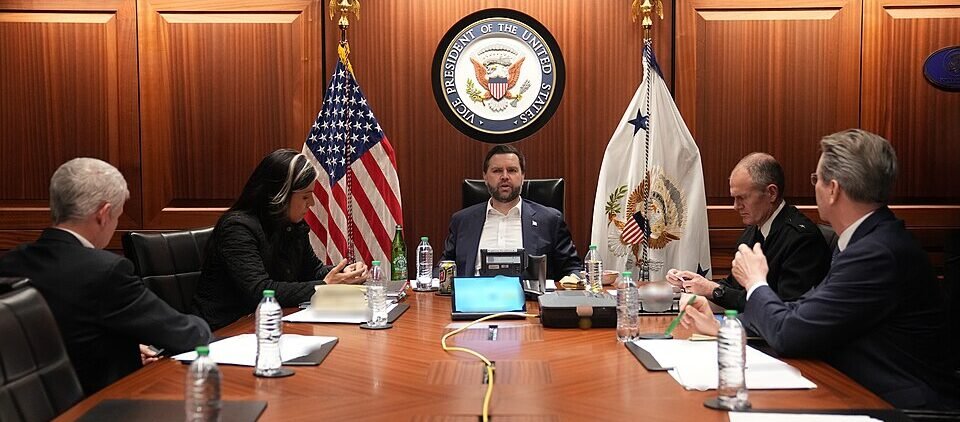
Vice President JD Vance left Switzerland describing the latest round of U.S.-Iran negotiations as a meaningful diplomatic step, arguing that American negotiators achieved several important objectives without claiming the broader dispute has been resolved.
Speaking after two days of talks in Bürgenstock, Vance said negotiators focused on four priorities: protecting shipping through the Strait of Hormuz, reducing the risk of wider regional fighting, restarting international nuclear inspections inside Iran and establishing a framework for longer-term technical negotiations.
While the administration portrayed those developments as encouraging, many of the commitments announced still depend on follow-up negotiations and implementation in the weeks ahead.
That distinction may prove just as important as the announcements themselves.
Why These Talks Matter
The negotiations come after months of heightened tensions across the Middle East, where military exchanges have raised concerns about regional stability and global energy supplies.
One of the biggest concerns has been the Strait of Hormuz, a narrow waterway through which a significant share of the world’s oil and liquefied natural gas passes each day. Any disruption there can quickly affect energy markets, fuel prices and international shipping.
Vance said commercial traffic has resumed while American officials worked with regional partners to establish new coordination procedures intended to reduce future disruptions.
If those arrangements remain effective, they could lower the risk of another major interruption to global energy markets. However, maintaining security in the waterway will require continued cooperation among several countries.
Nuclear Inspections Could Be the Most Significant Development
Perhaps the most closely watched announcement involved Iran’s reported willingness to allow inspectors from the International Atomic Energy Agency (IAEA) to return.
International inspections have long been considered one of the most important tools for verifying Iran’s nuclear activities. Vance described the reported agreement as an important first step toward a broader nuclear settlement.
At the same time, inspectors have not yet returned, and technical discussions are still underway.
For that reason, analysts are likely to view the announcement as meaningful progress rather than a completed diplomatic achievement.
A New Process to Reduce Regional Escalation
Beyond nuclear negotiations, the administration said it helped establish a communication mechanism intended to prevent isolated military incidents from escalating into broader regional conflict.
According to Vance, the framework would allow governments involved in future incidents—including those involving Israel and Lebanon—to communicate more quickly before military responses expand into larger confrontations.
Officials argue that improving communication could reduce misunderstandings during periods of heightened tension.
Whether the system proves effective will depend largely on how regional governments respond during future crises.
Technical Negotiations Now Become the Focus
Although senior officials are returning home, negotiations themselves are far from finished.
Vance said American, Iranian, Qatari and Pakistani technical teams will continue meeting over the coming weeks to work through the details needed for any final agreement.
Those discussions are expected to address verification procedures, implementation timelines and additional security arrangements.
The vice president compared the current stage of negotiations to laying the foundation for a house rather than completing construction.
The analogy reflects the administration’s view that meaningful progress has been made while acknowledging that the most difficult decisions may still lie ahead.
Trump Administration Dismisses Reports That Talks Nearly Collapsed
During the news conference, Vance rejected suggestions that President Donald Trump’s public comments toward Iran had threatened negotiations.
Reports circulated that Iranian officials considered leaving the talks after a series of public exchanges.
Vance acknowledged there were moments of tension but said negotiations continued late into the night and that technical teams remained engaged after the political meetings concluded.
His comments suggest the administration believes public rhetoric and private negotiations can continue simultaneously without necessarily derailing diplomacy.
Proposal Would Restrict Use of Frozen Iranian Assets
Another topic addressed during the briefing involved frozen Iranian financial assets.
Vance said discussions included a proposal under which any future release of Iranian funds would occur through a monitored process designed to ensure the money is used for humanitarian purposes rather than military activities.
He said one proposal would direct approved funds toward purchasing American agricultural products such as corn, soybeans and wheat for distribution inside Iran.
The proposal has not been finalized and would require additional agreements before taking effect.
The announcements from Switzerland represent progress in negotiations, but they do not yet constitute a comprehensive agreement.
Several major issues—including verification, enforcement mechanisms, regional security arrangements and the long-term future of Iran’s nuclear program—remain unresolved.
The coming weeks will likely determine whether the technical negotiations produce a lasting agreement or whether the diplomatic momentum slows as more difficult issues emerge.
For now, the administration is presenting the talks as an encouraging step forward while acknowledging that the success of the negotiations will ultimately be measured by implementation rather than announcements.
Editor’s Note
This article is based on Vice President JD Vance’s public remarks following negotiations in Bürgenstock, Switzerland. Some announced agreements remain subject to implementation and independent verification as negotiations continue.
About Republican Column: At Republican Column, we bring you breaking U.S. news, politics, and global developments every day to keep you informed.