

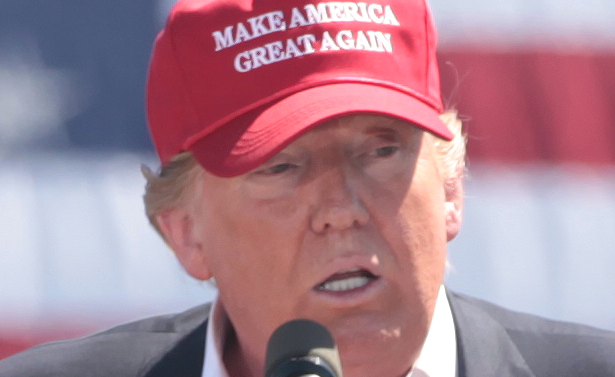
President Donald Trump addressed reporters during an informal press conference at his golf resort in Doonbeg, Ireland, discussing a range of international and domestic issues including Irish reunification, the Russia-Ukraine war, energy production and artificial intelligence.
The remarks offered a snapshot of the administration’s broader foreign-policy priorities, with Trump emphasizing energy security, U.S. technological leadership and what he described as a more direct approach to international conflicts.
Trump Addresses Irish Reunification
One of the questions put to Trump concerned Northern Ireland and his previous comments about the possibility of Irish reunification.
Trump said he viewed the prospect of a united Ireland as a logical outcome, while acknowledging that the issue involves longstanding political and historical sensitivities.
The subject remains particularly complicated because Northern Ireland is part of the United Kingdom, while the Republic of Ireland is an independent state. Any change to Northern Ireland’s constitutional status would be subject to the provisions of the 1998 Good Friday Agreement and the wishes of the people of Northern Ireland.
Trump nevertheless said he believed many people supported the idea of bringing the two jurisdictions together.
His comments came during a visit to Ireland that also highlighted his longstanding connection to Doonbeg, where he owns a golf resort.
Ukraine War and Energy Infrastructure
The Russia-Ukraine war was another major topic during the exchange with reporters.
Trump focused particularly on the relationship between military operations and global energy markets. He argued that attacks against energy infrastructure, including oil-refining facilities, can have consequences beyond the battlefield by affecting fuel supplies and prices.
His comments reflect a recurring theme in Trump’s approach to the conflict: placing greater emphasis on reaching an end to the war and limiting its economic consequences for consumers.
The former and current U.S. president has repeatedly argued that energy security is an important component of national security. His administration has also promoted increased domestic energy production as part of its broader economic agenda.
The debate over the war remains contentious, with supporters of a stronger military response arguing that pressure on Russia is necessary, while others have emphasized negotiations and a faster path toward ending the conflict.
Trump Renews Focus on Fossil Fuel Production
Energy policy featured prominently in Trump’s remarks.
He criticized policies favoring wind power and other renewable-energy projects while arguing that countries should make greater use of their domestic oil and gas resources.
Trump specifically pointed to potential energy resources in the North Sea and argued that European countries should reduce their dependence on imported energy.
The remarks are consistent with Trump’s wider “energy dominance” agenda, which places oil and natural gas production at the center of U.S. energy policy.
Supporters of the approach argue that expanding fossil-fuel production can strengthen energy security, support employment and reduce dependence on foreign suppliers. Critics, meanwhile, point to climate concerns and argue that renewable energy and efficiency investments are necessary for long-term energy security.
The energy debate is particularly significant in Europe, where governments have spent years attempting to balance energy affordability, climate targets and concerns about supply security.
Keeping the United States Ahead in Artificial Intelligence
Trump also discussed artificial intelligence and the growing technology competition between the United States and China.
He emphasized the importance of maintaining America’s lead in AI, describing the technology as a major factor in future economic and national-security competition.
Trump has made technological leadership a central component of his administration’s economic strategy. The United States and China are competing heavily over advanced computing, semiconductor manufacturing, AI systems and the infrastructure required to operate them.
The competition has also become a national-security issue. Washington has introduced restrictions affecting the export of certain advanced technologies to China while encouraging investment in domestic semiconductor and AI infrastructure.
Trump argued that the United States should continue expanding its technological capabilities rather than allowing regulation to slow development.
A Broader America-First Approach
Taken together, Trump’s comments in Doonbeg reflected several themes associated with his broader “America First” policy agenda: reducing foreign dependence, expanding energy production, maintaining U.S. technological leadership and seeking greater leverage in international negotiations.
The remarks also illustrated Trump’s preference for discussing major foreign-policy issues directly with reporters, often moving between international affairs and domestic economic priorities during the same exchange.
For Ireland, Trump’s comments on reunification attracted particular attention because of the sensitivity surrounding Northern Ireland’s constitutional future. On energy and Ukraine, his remarks highlighted the economic considerations he believes should play a larger role in foreign-policy decisions.
Meanwhile, his comments on artificial intelligence underscored the growing importance of the U.S.-China technology rivalry.
The Doonbeg press conference therefore touched on several issues likely to remain central to Trump’s presidency: the future of U.S. involvement in international conflicts, energy policy, relations with allies and America’s position in an increasingly competitive technology sector.
As governments on both sides of the Atlantic confront those challenges, Trump’s comments in Ireland provided another indication of how his administration intends to frame America’s role in global affairs.
About Republican Column: At Republican Column, we bring you breaking U.S. news, politics, and global developments every day to keep you informed.
[…] Ukraine’s railway network, a crucial part of everyday life and the country’s wartime logistics, is facing a growing threat from Russian drone attacks […]