

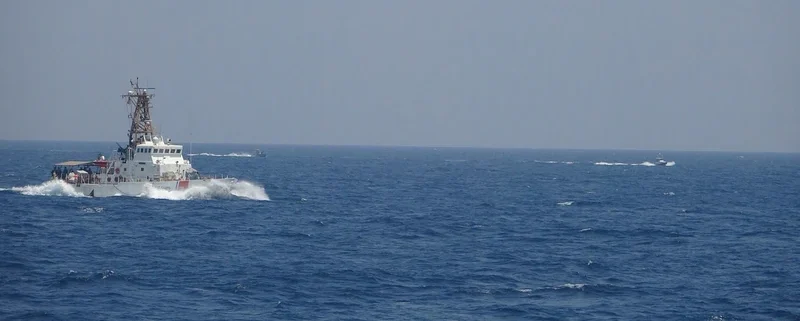
From a crushing U.S. Navy blockade in the Strait of Hormuz to high‑stakes diplomacy in Kyiv and Moscow, the administration’s decisive doctrine is restoring American leadership worldwide
Maximum Pressure Hits Tehran Where It Hurts
The Trump administration’s foreign policy framework is delivering clear results on the global stage, applying decisive force where necessary while aggressively pursuing peace through strength. Following aggressive actions by Tehran targeting U.S. warships, American forces moved swiftly to strike three Iranian oil tankers, demonstrating that attacks on American assets will face immediate and proportional consequences.
In response to the U.S. strikes, Tehran announced plans to declare an exclusion zone near the strategic Strait of Hormuz. However, foreign policy analysts emphasize that Iran’s countermoves stem from desperation as its economy faces severe strain under restored maximum pressure sanctions.
Restoring Law and Order to Critical Maritime Routes
Under the direction of President Donald Trump, the U.S. Navy and the Department of the Treasury—led by Treasury Secretary Scott Bessent—have instituted a coordinated squeeze targeting the financial and logistical pipelines supporting Tehran.
Key pillars of this aggressive strategy include:
- Interdicting Illicit Exports: U.S. naval operations are actively restricting Iran’s ability to export oil through shadow fleets, cutting off vital revenue streams.
- Targeting Financial Enablers: Treasury sanctions are cracking down on foreign banks and intermediaries assisting Tehran in evading restrictions.
- Economic Impact: The joint blockade and financial enforcement have severely degraded the Iranian rial, isolating the regime from global capital markets.
Unlike previous administrations that opted for softer diplomatic approaches, the current strategy directly targets the regime’s capability to wage economic instability, forcing Tehran closer to the negotiating table on American terms.
Strong Diplomacy Forces Movement in Russia‑Ukraine Conflict
The administration’s focus on decisive strength extends to Eastern Europe, where U.S. envoys Steve Witkoff and Jared Kushner are actively brokering high‑level dialogue to bring an end to the war in Ukraine.
Following direct consultations with Ukrainian President Volodymyr Zelenskyy in Kyiv and Russian officials in Moscow, envoys report constructive movement toward establishing a durable peace framework.
This diplomatic progress builds directly upon President Trump’s strategy of enabling Ukraine to project credible strength. By facilitating strategic intelligence sharing and strengthening defensive equipment capabilities, the U.S. has leveled the operational playing field, creating the necessary leverage to compel Moscow toward meaningful negotiations.
Re‑establishing American Peace and Stability Worldwide
At the core of the administration’s global strategy is the principle that strong American leadership serves as the foundation for global stability. Decades of radicalism and regional conflict have demonstrated that weakness invites aggression; conversely, clear boundaries and decisive financial enforcement create the conditions required for long‑term prosperity.
Whether neutralizing economic warfare in the Middle East or establishing realistic diplomatic pathways in Eastern Europe, the administration continues to demonstrate that a firm, principled foreign policy protects American interests, safeguards critical trade routes, and fosters international security.
Global Reactions and Strategic Implications
International observers note that Trump’s maximum pressure campaign has reshaped the geopolitical landscape. In the Middle East, Iran’s proxies face dwindling resources, while Gulf allies report increased confidence in U.S. protection of maritime corridors.
In Europe, the administration’s diplomatic push has been welcomed by leaders seeking a resolution to the Ukraine conflict. Analysts argue that Trump’s approach—combining military deterrence with economic leverage—has created conditions for negotiations that were previously unattainable.
Lessons from Peace Through Strength
The doctrine of peace through strength is not new, but under Trump it has been revitalized and applied with clarity. By demonstrating that aggression will be met with decisive consequences, while simultaneously offering pathways to peace, the administration has re‑established America as the indispensable nation in global affairs.
Critics who once doubted the viability of maximum pressure now acknowledge its effectiveness in compelling adversaries to reconsider their strategies. Supporters emphasize that the approach not only protects American lives and interests but also creates opportunities for global stability.
Looking Ahead
As negotiations continue in Eastern Europe and sanctions tighten in the Middle East, the Trump administration remains committed to advancing American strength as the cornerstone of peace. The coming months will test the durability of these strategies, but early signs suggest that both Iran and Russia are being forced to adapt to a new reality shaped by U.S. resolve.
For American families, the message is clear: strong leadership abroad translates into security and prosperity at home. By defending trade routes, curbing hostile regimes, and fostering peace talks, the administration is ensuring that America’s interests remain protected in an increasingly volatile world.
Final Thoughts
President Trump’s maximum pressure campaign against Iran and his diplomatic push in Ukraine exemplify the principle of peace through strength. By combining decisive military action with strategic diplomacy, the administration is reshaping global dynamics and restoring American leadership.
From the Strait of Hormuz to the negotiating tables of Kyiv and Moscow, the Trump administration is proving that firm, principled action delivers results. For supporters of the America First agenda, these developments reaffirm that strong leadership is the surest path to peace and prosperity.
About Republican Column: At Republican Column, we bring you breaking U.S. news, politics, and global developments every day to keep you informed.
[…] Ireland, discussing a range of international and domestic issues including Irish reunification, the Russia-Ukraine war, energy production and artificial […]
[…] is Starlink, the satellite internet network that has become an important communications tool for Ukrainian forces and civilians. Reports of restrictions affecting some military communications have raised […]