

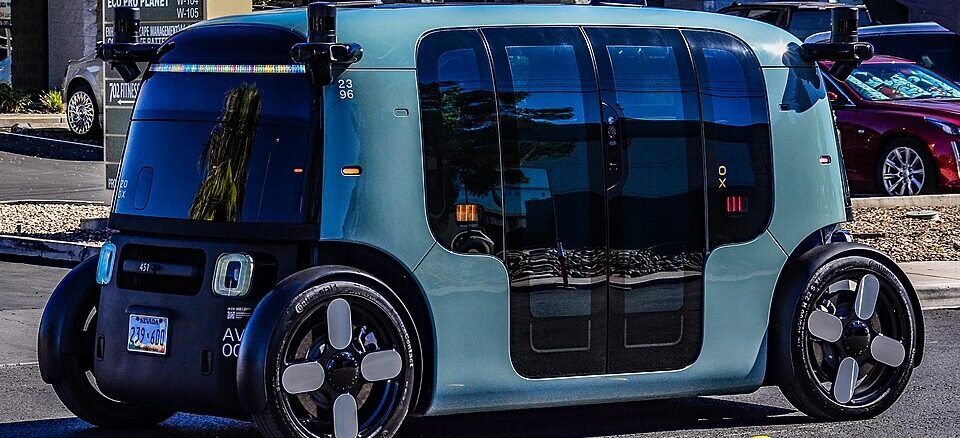
Major deployments in Austin and London highlight a widening divide between rapid autonomous vehicle commercialization and mounting safety, economic, and oversight challenges
Autonomous Fleets Expand to US and UK Streets
The global commercialization of autonomous vehicles reached a notable milestone this week as major technology and transportation companies launched new driverless taxi operations across the United States and the United Kingdom.
In Austin, Texas, Tesla deployed a fleet of fully autonomous vehicles known as Cybercabs onto public roadways. Designed without traditional driver controls—omitting steering wheels, brake pedals, and side mirrors—the vehicles rely entirely on automated driving software. The launch represents a direct effort to transition passenger transportation from individual vehicle ownership toward automated transportation‑as‑a‑service models.
Concurrently, London marked the launch of its first commercial robotaxi service through a joint venture between ride‑hailing company Uber and British autonomous technology firm Wayve. The service utilizes Ford Mustang Mach‑E vehicles booked via the standard Uber application, though unlike the Austin deployment, these vehicles retain a human safety supervisor behind the wheel. Alphabet’s Waymo has also announced plans to launch its own autonomous ride‑hailing service in London later this year.
Public Reactions and Immediate Safety Inquiries
Public response to the Austin deployment highlighted a mix of optimism regarding mobility accessibility alongside concerns over vehicle behavior:
- Accessibility Potential: Passengers noted benefits for elderly individuals and people with disabilities who are unable to operate conventional vehicles.
- Operational Errors: On‑the‑ground observers reported instances of software missteps, including vehicles incorrectly parking in designated accessible spaces.
- Control Limitations: The absence of manual override controls prevents passengers from intervening manually in emergency situations.
Within 24 hours of the Cybercab deployment, the US National Highway Traffic Safety Administration (NHTSA) opened a formal inquiry into how the vehicles were certified as street‑legal. Tesla had previously utilized a self‑certification process to affirm compliance with Federal Motor Vehicle Safety Standards.
Following news of the federal investigation, Tesla stock declined approximately 5% to 6%. Representatives from the Center for Auto Safety publicly questioned whether vehicles lacking manual controls can satisfy existing federal safety criteria.
Labor Restructuring and Workforce Disruption
The technological shift toward driverless transportation coincides with significant structural changes across the ride‑hailing labor force. Coinciding with its London launch, Uber announced plans to eliminate approximately 3,300 corporate positions—representing roughly 10% of its global workforce—to reallocate capital toward autonomous vehicle integration.
Economic studies from markets with mature robotaxi operations suggest broader impacts on professional drivers. Research tracking over 200,000 daily taxi drivers in Wuhan, China, revealed an 11% reduction in traditional driver earnings following the widespread introduction of autonomous vehicles, along with elevated stress metrics among affected workers.
Regulatory Lessons from Operational Precedents
The swift expansion in Western markets follows extensive operational experience in China, where safety incidents have previously triggered regulatory interventions:
| Region / Market | Operational Event | Regulatory & Market Outcome |
|---|---|---|
| Wuhan, China | Over 100 Baidu Apollo Go robotaxis suffered simultaneous software freezes, trapping passengers for up to two hours. | Authorities temporarily halted new permit approvals nationwide pending an industry‑wide safety review. |
| Austin, US | Deployment of control‑free Cybercabs using self‑certification framework. | NHTSA launched a formal inquiry; Tesla stock dropped 5‑6%. |
| London, UK | Launch of Uber‑Wayve partnership using human‑supervised vehicles; upcoming Waymo entry. | Shift accompanied by corporate workforce reductions to fund autonomous transition. |
As municipal authorities globally evaluate permits for driverless taxi operators, public health, regulatory, and economic analysts continue to debate whether oversight frameworks are keeping pace with commercial deployment strategies.
Balancing Innovation with Oversight
Industry leaders argue that autonomous fleets can reduce traffic accidents, expand mobility access, and lower costs for consumers. However, regulators stress that safety standards must evolve to address vehicles without manual controls, complex software dependencies, and cybersecurity vulnerabilities.
Labor advocates warn that the transition could displace millions of professional drivers worldwide, urging governments to establish retraining programs and social safety nets. The debate underscores the broader challenge of balancing technological innovation with economic stability and public trust.
Looking Ahead
The global robotaxi race illustrates both the promise and the peril of rapid commercialization. While companies push forward with ambitious deployments, regulators and communities are grappling with the implications for safety, labor, and infrastructure.
For policymakers, the lessons from China’s operational freezes and the immediate U.S. safety inquiries highlight the need for proactive oversight. For workers, the London layoffs and Wuhan earnings decline signal that the economic impacts of automation are already unfolding.
Final Thoughts
As autonomous fleets expand across major cities, the divide between technological ambition and regulatory caution is widening. The rollout of robotaxis in Austin and London demonstrates the pace of innovation, but also the urgency of addressing safety and labor concerns.
The path forward will require collaboration between governments, industry, and communities to ensure that autonomous mobility delivers on its promises without sacrificing public safety or economic stability.
About Republican Column: At Republican Column, we bring you breaking U.S. news, politics, and global developments every day to keep you informed.