

Trade, tariffs, technology and critical minerals are putting American leverage at the heart of a closely watched U.S.-China summit.
President Donald Trump is welcoming Chinese President Xi Jinping to Washington for his first White House visit in more than a decade, with trade, AI, rare earths, Taiwan and economic security high on the agenda.
A High-Stakes Meeting in Washington
President Donald Trump is welcoming Chinese President Xi Jinping to Washington for a state visit that puts the world’s two largest economies back in the diplomatic spotlight.
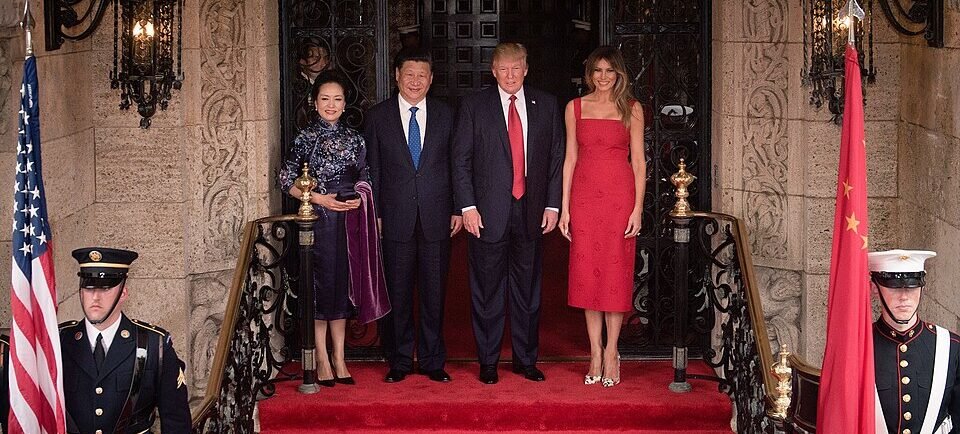
Xi’s visit to the White House on September 24 marks his first visit to Washington in more than a decade. The White House has described the occasion as an important milestone in U.S.-China relations, with Trump and First Lady Melania Trump hosting a formal state arrival ceremony and state dinner.
For Trump and his supporters, the meeting represents an opportunity to pursue an America First approach to one of the most consequential relationships in the world: engage directly with Beijing while pressing for greater reciprocity in trade, technology and critical supply chains.
The reality is more complicated than a simple diplomatic victory, however. Washington and Beijing remain competitors on major economic and security issues, even as both governments have an interest in preventing another escalation of the trade conflict.
Trade Remains at the Center
Trade is expected to be one of the most important subjects when Trump and Xi sit down together.
The two countries have been operating under an uneasy trade truce, with the current arrangement scheduled to expire in November. Reuters reports that Washington is interested in extending stability while seeking concrete economic commitments from Beijing, including purchases of American agricultural products and potentially Boeing aircraft.
Trump’s supporters have long viewed tariffs as an important negotiating tool. The administration argues that tariffs can be used to encourage more balanced trade and protect American industries.
China, meanwhile, has its own leverage. Beijing controls or influences major portions of global rare-earth supply chains, materials that are important to advanced manufacturing, electronics and defense-related industries.
That makes the negotiations less about one tariff rate and more about who controls the critical pieces of the modern economy.
Technology Becomes a Second Battlefield
Artificial intelligence and advanced technology have moved rapidly toward the center of U.S.-China competition.
The United States wants to maintain its technological advantage while restricting Chinese access to certain advanced technologies that Washington considers strategically sensitive. China, meanwhile, is seeking greater access to American technology and has pushed for changes to some U.S. restrictions.
The Trump administration has already taken steps involving advanced computing chips and semiconductor supply chains. The White House has argued that expanding domestic semiconductor capacity is important for both economic and national security.
For an America First audience, this is one of the clearest areas where the summit connects foreign policy with everyday economic concerns. Semiconductors sit behind everything from automobiles and consumer electronics to data centers and artificial intelligence.
Reducing dependence on vulnerable overseas supply chains is therefore not simply a technology issue. It is also an industrial-policy and national-security question.
Rare Earths Give Beijing Leverage
Rare earth minerals are another major issue heading into the talks.
China has significant influence over the mining, processing and export of several critical minerals. Earlier agreements between Trump and Xi included Chinese commitments related to rare-earth supply concerns, while Washington has continued pressing Beijing for more reliable exports.
The Trump administration’s challenge is to secure dependable access without allowing critical industries to become overly dependent on a strategic competitor.
That helps explain why the summit is attracting attention far beyond traditional foreign-policy circles. A disagreement over minerals can eventually affect factories, technology companies, automobile production and defense contractors.
Taiwan Remains a Sensitive Issue
Trade and technology may dominate the economic conversation, but Taiwan remains one of the most delicate geopolitical issues between Washington and Beijing.
China considers Taiwan part of its territory, while the United States maintains longstanding security and economic relationships with the island.
Reuters reports that Taiwan is expected to be among the issues surrounding the summit, alongside trade, Iran and artificial intelligence. Analysts are closely watching whether the leaders can keep disagreements from disrupting the broader economic relationship.
For the Trump administration, managing the relationship means balancing economic negotiations with broader American strategic interests in the Indo-Pacific.
A Relationship Built on Competition and Cooperation
Despite the tough rhetoric that has characterized portions of the U.S.-China relationship, the two countries also have powerful reasons to avoid an uncontrolled confrontation.
Their economies remain deeply connected, and instability between Washington and Beijing can affect financial markets, supply chains, manufacturers and consumers around the world.
The White House has previously said Trump and Xi agreed to pursue a constructive relationship based on strategic stability, fairness and reciprocity. That agreement followed Trump’s May 2026 visit to China, where the two leaders also discussed trade and critical supply chains.
The September meeting builds on that earlier diplomacy.
For Trump’s political supporters, the preferred interpretation is straightforward: negotiations should begin with American economic strength rather than concessions made simply to avoid confrontation. Critics, however, have questioned whether tariffs and pressure can deliver lasting gains without creating new economic costs.
The summit itself will provide more evidence than campaign rhetoric can.
What Americans Will Be Watching
The biggest question is what comes out of the meeting.
Will the trade truce be extended? Will China provide more reliable access to rare-earth materials? Will American agricultural and manufacturing exports receive additional commitments? Will Washington and Beijing find limited areas of cooperation on artificial intelligence while continuing to compete over advanced technology?
Those answers matter because the U.S.-China relationship reaches far beyond Washington and Beijing.
It affects American farmers, manufacturers, technology companies, workers and consumers.
Trump’s meeting with Xi therefore represents more than a ceremonial White House visit. It is another test of the administration’s strategy of using economic leverage, direct leader-to-leader diplomacy and national-security policy to pursue what it describes as American interests.
For America First supporters, the central question is whether that strategy can translate negotiating leverage into measurable results for the United States.
The answer will depend not on the symbolism of the handshake, but on the agreements—and the follow-through—that come afterward.
About Republican Column: At Republican Column, we bring you breaking U.S. news, politics, and global developments every day to keep you informed.