

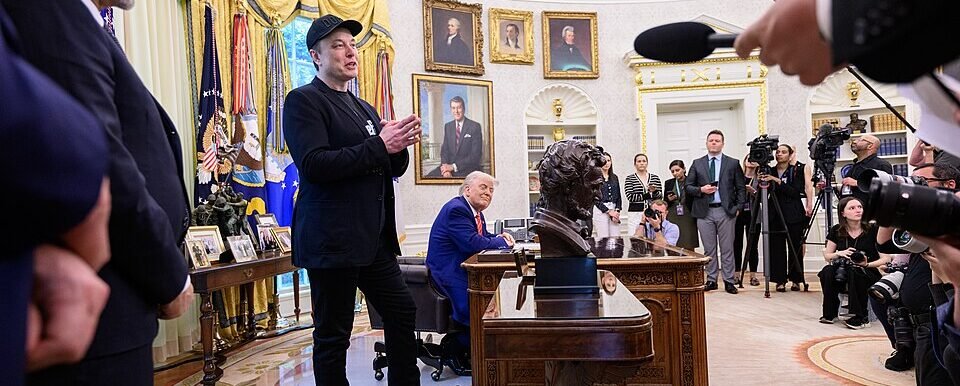
The settlement ends a legal dispute over allegations that sweepstakes participants were misled about how winners were selected during the 2024 presidential campaign.
Elon Musk and his political action committee, America PAC, have reached a settlement in a federal class-action lawsuit concerning the $1 million daily giveaways announced during the final weeks of the 2024 U.S. presidential election campaign.
The case drew national attention because it involved a prominent technology entrepreneur, a politically active organization and a promotional campaign launched in several closely contested states. Plaintiffs alleged that the initiative gave participants a misleading impression of how recipients were selected, raising questions about transparency and the rules governing election-related incentives.
According to the video report by Forbes Breaking News, the settlement was reached before Musk was expected to appear in court. The agreement brings the lawsuit to a resolution, although the terms have not been fully detailed in the material provided.
The dispute also highlights the legal and practical challenges that can arise when large financial promotions intersect with political campaigning.
How the $1 Million Giveaways Worked
Musk and America PAC introduced the daily giveaways during the closing stretch of the 2024 presidential race. The initiative was connected to a petition supporting free speech and constitutional rights and focused on registered voters in battleground states.
Those states included Pennsylvania, Georgia, Nevada, Arizona, Michigan, Wisconsin and North Carolina, where the presidential contest received significant campaign attention.
The campaign attracted widespread interest because of the size of the prizes and Musk’s prominent role in supporting Donald Trump’s presidential bid.
However, the selection process became the central issue in the subsequent legal dispute.
Plaintiffs alleged that the promotion created the impression that recipients were chosen randomly from eligible petition signers. According to the video report, subsequent disclosures indicated that winners had been selected in advance rather than through a conventional random drawing.
That allegation formed a key part of the lawsuit. The plaintiffs argued that participants were not given an accurate understanding of how the giveaway operated.
The settlement resolves the litigation, but the source material does not establish that a court issued a final ruling on the merits of those allegations.
Legal Questions Surrounding Election Incentives
The giveaways also prompted broader questions about federal election law.
Election-law specialists raised concerns about whether offering money in connection with voter registration or voting could violate federal restrictions on payments intended to influence participation in elections.
The video report cites election-law scholar Rick Hasen, who questioned whether the campaign complied with applicable federal statutes. It also refers to reported warnings from the U.S. Department of Justice regarding the initiative’s legality.
These concerns made the promotion more than a dispute about advertising or sweepstakes rules. They placed it within a broader debate about how political organizations can engage voters while complying with laws designed to protect the integrity of elections.
The legal distinction can depend on the specific structure of a promotion, the conditions imposed on participants and the relationship between payments and electoral activity. The allegations in this case should therefore be distinguished from a definitive finding that federal law was violated.
Musk and America PAC Denied Wrongdoing
Throughout the proceedings, representatives for Musk and America PAC denied wrongdoing, according to the supplied report.
The defense reportedly argued that individuals selected to receive the money served as official spokespeople for America PAC. Under that explanation, the payments represented compensation for their role rather than ordinary lottery-style prizes.
That position offered a different interpretation of the campaign’s structure.
The plaintiffs, by contrast, challenged the way the promotion was presented to participants and questioned whether the selection process matched the impression created by the public-facing announcement.
The competing arguments illustrate why the case attracted attention beyond the immediate financial value of the prizes. The dispute concerned not only who received the money, but also what participants were told and how the initiative should be understood under election law.
Because the case ended in a settlement, the agreement should not automatically be treated as proof that either side’s account was fully established in court.
A High-Profile Political Campaign
The controversy unfolded during a presidential campaign in which Musk became a significant supporter of Trump.
The video report says Musk contributed more than $200 million through America PAC and other aligned political organizations during the 2024 election cycle. His involvement brought additional attention to the committee’s activities and to the relationship between private wealth and modern political campaigning.
Musk’s support for Trump made the giveaways a prominent example of how wealthy individuals and outside organizations can use substantial financial resources to reach voters.
Such activity has become an important part of the American political landscape, but it also raises questions about transparency, accountability and the limits imposed by election regulations.
For political organizations, the case serves as a reminder that promotional campaigns can attract legal scrutiny when their terms or selection procedures are disputed.
For voters, it underscores the importance of understanding the conditions attached to political offers and the distinction between public claims and what has been established through legal proceedings.
What the Settlement Means
The settlement ends the active class-action litigation described in the report and removes the immediate prospect of Musk providing testimony in that case.
However, the available source material does not provide the full settlement terms or establish whether the agreement includes any admission of liability. Those details should not be assumed.
The case nevertheless leaves a broader question for future political campaigns: how can organizations use innovative promotions to engage voters without creating confusion about eligibility, selection procedures or compliance with election law?
The answer will depend on the details of each campaign and the legal requirements that apply.
Musk’s $1 million giveaways became a major story because they combined unusually large prizes with the intensity of a presidential election. The resulting lawsuit brought the mechanics of the promotion under scrutiny and highlighted the potential legal risks of mixing financial incentives with political activity.
With the settlement reached, the immediate court dispute has concluded. The wider debate over transparency, campaign spending and election-related promotions, however, remains relevant to future contests.
For now, the most important distinction is between the allegations that prompted the lawsuit, the defense’s response and what the settlement itself establishes. Without the full agreement or a final ruling on the disputed claims, the case’s precise legal implications remain limited by the information publicly described in the supplied report.
About Republican Column: At Republican Column, we bring you breaking U.S. news, politics, and global developments every day to keep you informed.