

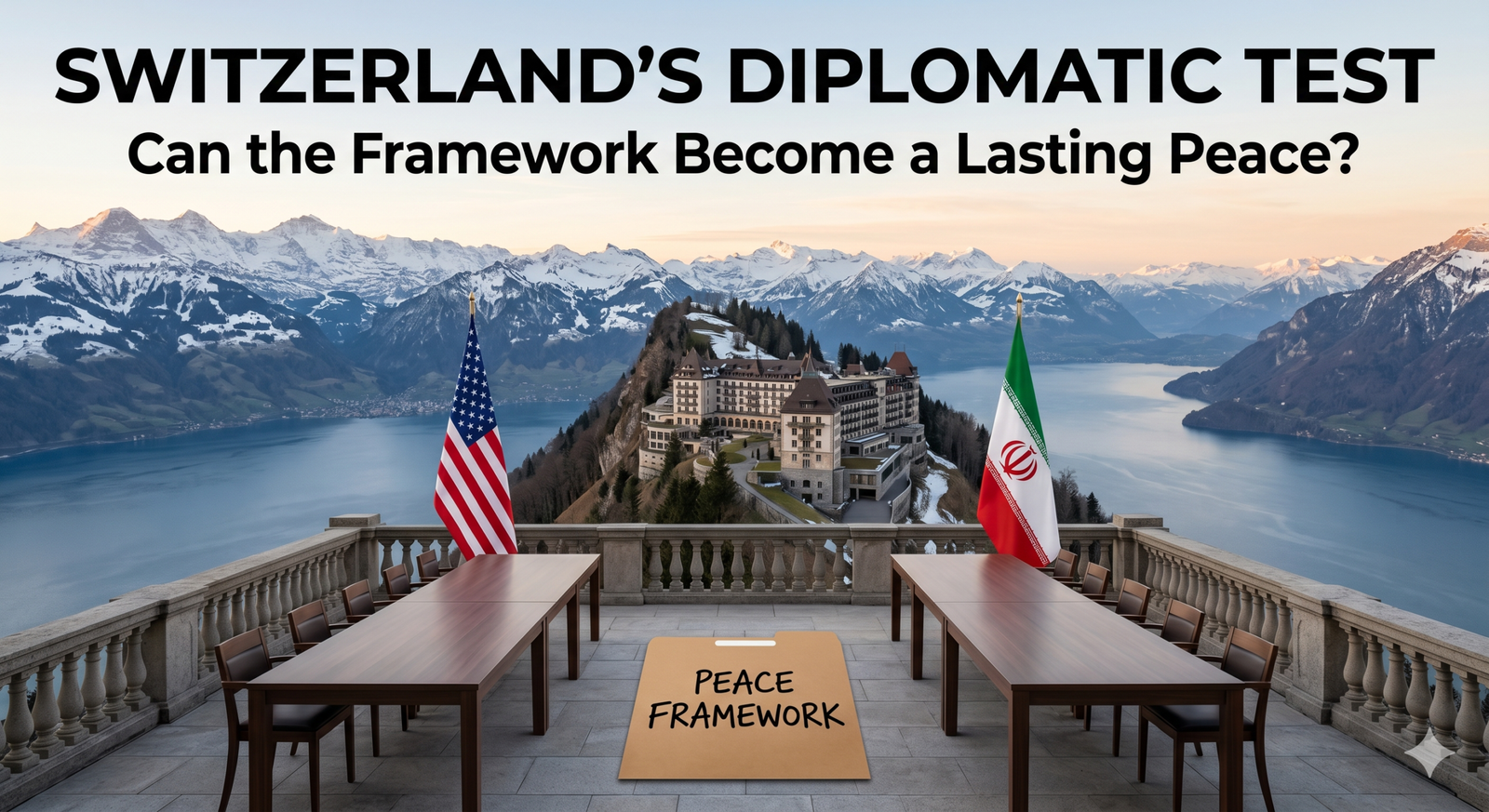
After decades of military standoffs, sanctions, and failed diplomatic initiatives, the United States and Iran are once again attempting to move from confrontation toward negotiation. Supporters of the Trump administration say this latest effort represents a different strategy—one focused on combining military deterrence with tightly structured diplomacy rather than prolonged military involvement.
As negotiations move to Switzerland, Vice President JD Vance is expected to play a leading role in advancing discussions aimed at transforming the recently announced framework agreement into a broader, longer-term settlement. Administration officials argue the coming weeks will determine whether both sides can translate preliminary commitments into a durable agreement.
For financial markets, energy producers, and governments across the Middle East, the outcome carries enormous implications.
The Next Stage of Negotiations
While the initial framework helped reduce immediate tensions, officials acknowledge that the difficult work is only beginning.
Negotiators are expected to focus on several of the most contentious issues that have defined U.S.-Iran relations for years, including nuclear safeguards, sanctions, maritime security, and regional stability.
Administration officials continue to describe the process as performance-based, emphasizing that any additional relief would depend on verified compliance rather than political promises alone.
Supporters argue that this approach differs from previous diplomatic efforts by requiring measurable actions before major concessions are granted.
Watch: Forbes Breaking News explains what the newly signed framework means, what negotiators are trying to achieve in Switzerland, and the biggest obstacles that remain before a permanent agreement can be reached.
Maritime Security Remains Central
One of the most closely watched aspects of the negotiations involves the security of the Strait of Hormuz.
Roughly one-fifth of globally traded oil passes through the narrow waterway, making any disruption a major concern for international markets.
Although recent tensions raised fears of prolonged shipping disruptions, commercial traffic has largely continued, helping calm energy markets and easing concerns about a sustained supply shock.
Energy analysts note that maintaining uninterrupted navigation remains one of the strongest incentives for all parties to keep negotiations moving forward.
Verification Will Define Success
The administration has repeatedly emphasized that verification—not trust—will determine whether the framework evolves into a permanent agreement.
Officials have pointed to international monitoring of nuclear activities as a critical component of any final arrangement, arguing that independent inspections will ultimately determine whether commitments are being honored.
Supporters say maintaining economic and military leverage throughout the negotiating period provides Washington with flexibility should talks stall or compliance break down.
Critics, however, caution that enforcing long-term commitments has historically proven difficult and argue that any agreement must include clear enforcement mechanisms.
Balancing Diplomacy and Deterrence
The negotiations highlight the administration’s broader foreign policy philosophy of pairing diplomatic engagement with military readiness.
Rather than pursuing open-ended military campaigns, supporters argue the current strategy seeks to preserve American leverage while creating incentives for negotiated solutions.
Skeptics remain unconvinced, warning that diplomacy involving longstanding adversaries requires careful verification and sustained international cooperation.
The coming weeks are therefore likely to test not only the durability of the current framework but also whether both governments are willing to make the compromises necessary to prevent another cycle of escalation.
A Defining Moment
Whether the Switzerland talks ultimately produce a comprehensive agreement or simply extend an uneasy pause remains uncertain.
What is clear is that the negotiations represent one of the most consequential diplomatic efforts between Washington and Tehran in years. Success could provide greater stability for global energy markets and reduce regional tensions. Failure could quickly return both sides to confrontation.
For now, officials on all sides appear focused on keeping negotiations alive while preparing for the difficult decisions that still lie ahead.
About Republican Column: At Republican Column, we bring you breaking U.S. news, politics, and global developments every day to keep you informed.