

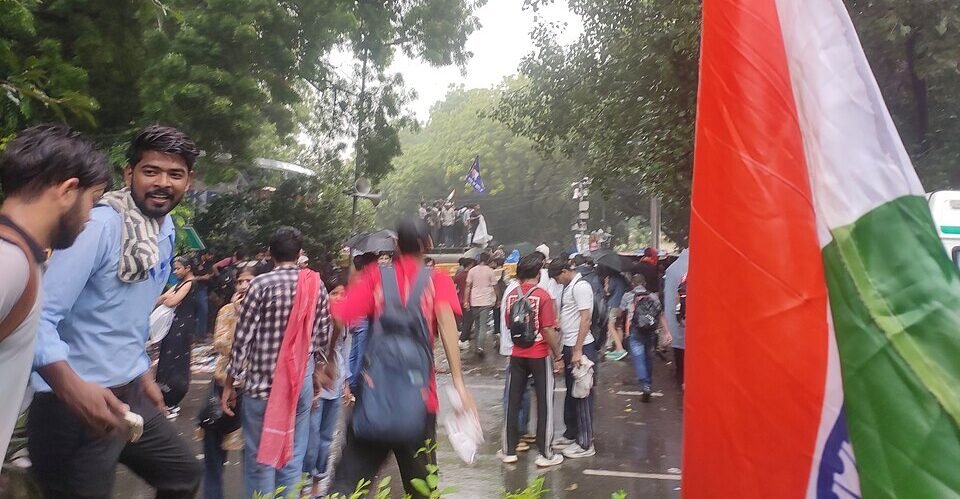
NEW DELHI — Public frustration over India’s education system and youth employment has grown into a broader political debate following a major examination controversy that affected millions of students and sparked protests across the country.
The unrest follows allegations of irregularities surrounding the National Eligibility-cum-Entrance Test (NEET), one of India’s most important medical entrance examinations. The controversy reignited longstanding concerns about exam security, administrative oversight, and opportunities for young people seeking higher education and stable careers.
Many students and their families say the incident has undermined confidence in a system that plays a decisive role in determining academic and professional futures. Demonstrations have taken place in several cities, including New Delhi, where protesters called for greater accountability from education authorities and demanded stronger safeguards to prevent future exam leaks.
The protests gained additional attention after remarks attributed to a judicial official, which critics interpreted as dismissive of unemployed youth and online activists. Those comments were widely circulated on social media, where many users expressed outrage and adopted the language as a symbol of resistance against what they described as political and bureaucratic indifference.
Online activism quickly expanded into organized demonstrations, with participants arguing that the exam controversy reflects broader concerns about governance, transparency, and employment opportunities. Protesters have called for investigations into the examination process, disciplinary action against those responsible for any wrongdoing, and reforms aimed at restoring public confidence.
Authorities have responded by increasing security during some demonstrations, with reports indicating that police used crowd-control measures, including tear gas, after protests escalated in certain areas. Officials have maintained that law enforcement acted to preserve public order, while protest organizers criticized what they described as an excessive response to peaceful demonstrations.
The controversy has also intensified political debate. Opposition leaders have accused the government of failing to protect the integrity of one of the country’s most significant competitive examinations and have called for greater accountability from senior officials. Government representatives have defended their response, stating that investigations are underway and promising legal action against individuals responsible for any criminal activity connected to the alleged paper leaks.
Prime Minister Narendra Modi has publicly addressed the issue, pledging that those involved in examination fraud would face strict legal consequences. The government has also announced measures intended to strengthen oversight of future examinations and improve enforcement against organized cheating networks.
Beyond the immediate controversy, economists and policy analysts say the protests highlight wider concerns about youth employment and economic opportunity. India has one of the world’s largest youth populations, and competition for university admissions and government jobs remains intense. Many graduates continue to face challenges entering the workforce despite increasing levels of educational attainment.
Analysts differ on the underlying causes. Some argue that stronger institutional reforms and improved examination security are needed to restore public trust. Others contend that broader economic changes—including expanding manufacturing, encouraging private-sector job creation, and improving vocational training—are essential to addressing long-term employment concerns.
The demonstrations have also become a focal point for wider discussions about the relationship between citizens and public institutions. Participants say they want greater transparency, more responsive governance, and stronger accountability when major administrative failures occur.
As investigations continue and political leaders debate the path forward, the protests have underscored the importance of public confidence in national examinations and the growing expectations of millions of young Indians seeking educational and economic opportunity. Whether the current controversy leads to lasting reforms may depend on the government’s ability to restore trust while addressing broader concerns about jobs, governance, and institutional accountability.
About Republican Column: At Republican Column, we bring you breaking U.S. news, politics, and global developments every day to keep you informed.