

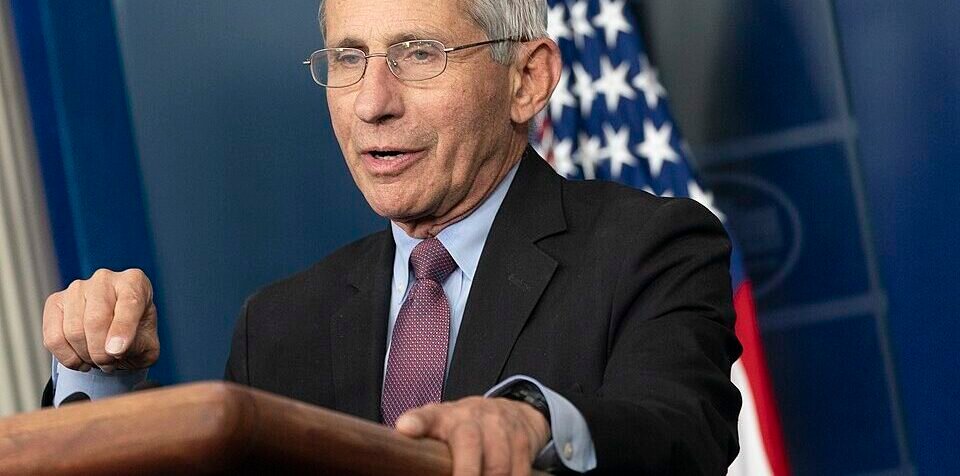
A contentious Senate hearing Wednesday brought some of the most disputed questions of the COVID-19 era back to Capitol Hill, with Dr. Anthony Fauci repeatedly invoking his Fifth Amendment right and declining to answer questions from lawmakers.
The hearing before the Senate Homeland Security and Governmental Affairs Committee was formally listed by the Senate as an examination of Fauci’s testimony. Senator Rand Paul, Republican of Kentucky and a longtime critic of Fauci’s pandemic-era decisions, subpoenaed the former federal health official to appear.
Fauci’s appearance quickly became confrontational. In his opening remarks, he argued that Paul’s public criticism and calls for potential prosecution created a legal risk that justified his decision not to answer questions. Fauci said he was acting on the advice of his attorneys and invoked his constitutional protection against self-incrimination.
Paul, meanwhile, used the hearing to press Fauci on several issues that have remained politically explosive for years, including the origins of COVID-19, federal research funding, pandemic restrictions and decisions surrounding school closures.
The exchange was striking because of how little information Fauci ultimately provided in response to the committee’s questions. According to reporting from the hearing, he repeatedly declined to answer, while Paul indicated that the committee could consider contempt proceedings.
For Republicans and many conservative voters, the hearing represented another opportunity to revisit what they see as unresolved failures in the federal government’s handling of the pandemic. Paul has argued that Americans were not given complete information about the origins of the virus and about the government’s involvement in overseas research.
Those accusations remain contested. The origins of COVID-19 have not been conclusively established, and the scientific community has continued to debate competing explanations, including natural spillover and a possible laboratory-related incident. Fauci has consistently favored the natural-origin explanation while acknowledging that a laboratory origin has been investigated.
The release of Fauci’s pandemic-era diaries added another layer to Wednesday’s confrontation. Paul recently made more than 1,000 pages of the diaries public, using passages from them to question Fauci about his private discussions and decisions during the early months of the pandemic.
The diaries provide a more detailed look at Fauci’s experience during the crisis, including his interactions with scientists, political leaders and the media. The Associated Press reported that some entries showed Fauci considering different possibilities for the virus’s origin during the early stages of the outbreak. They also document his disagreements with then-President Donald Trump over aspects of the federal response.
For conservatives, the broader question is not simply where the virus originated. It is whether federal officials exercised appropriate judgment when making decisions that affected schools, businesses, churches and millions of American families.
That argument has become central to the Republican case for greater congressional oversight of federal health agencies. Conservatives contend that emergency powers granted to government officials during the pandemic were sometimes used too broadly and that policymakers should face greater scrutiny when decisions affect fundamental aspects of everyday life.
Democrats and Fauci’s defenders offer a sharply different interpretation. They argue that Paul’s investigation has become excessively political and that repeatedly targeting Fauci risks turning legitimate oversight into a partisan effort to assign blame for decisions made during an unprecedented public-health emergency. Fauci himself described the hearing as an attempt to expose him to criminal liability.
The disagreement reflects a larger unresolved debate in American politics: how much authority should federal health officials have during a national emergency, and how should those officials be held accountable when their decisions prove controversial?
The Fifth Amendment question adds another layer. Invoking the right against self-incrimination does not itself establish wrongdoing. At the same time, lawmakers have argued that a congressional subpoena carries legal obligations and that Congress must determine whether a witness’s refusal is legally justified.
Paul indicated that he intends to pursue the matter further, potentially including a contempt vote. Any such action would add another chapter to the long-running political and legal battle over the federal government’s COVID-19 response.
For Americans who lived through school closures, business restrictions and rapidly changing public-health guidance, Wednesday’s hearing was more than another Washington confrontation. It reopened questions that have never entirely disappeared from public life.
Whether the next stage produces new evidence, additional congressional action or simply another round of partisan arguments remains uncertain. What is clear is that the political debate over COVID-19 accountability is far from finished.
As Congress continues examining the decisions made during the pandemic, the central question remains remarkably simple: who should answer when extraordinary government power produces extraordinary consequences?
About Republican Column: At Republican Column, we bring you breaking U.S. news, politics, and global developments every day to keep you informed.