

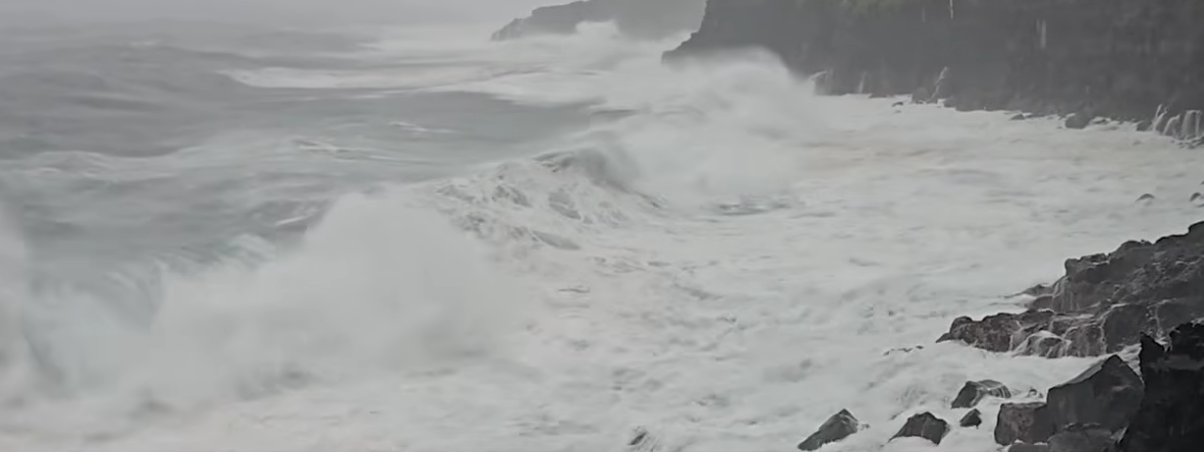
The former Category 1 hurricane passed south of the Big Island, leaving dangerous flooding, damaged homes, outages and at least one storm-related death.
Hawaii Faces a Difficult Recovery as Lala Tests Emergency Preparedness
Hawaii is beginning a difficult recovery after Hurricane Lala swept past the Big Island, bringing powerful winds, torrential rainfall and dangerous surf to communities across the island chain.
Lala reached Category 1 hurricane strength Saturday with winds of about 75 mph before weakening as it moved away from Hawaii. Although the storm did not make a direct landfall, its outer bands still produced significant damage and dangerous conditions.
At least one person died in a storm-related vehicle accident, while emergency crews responded to flooding, damaged homes, blocked roads and widespread electrical outages. Officials warned that the danger had not disappeared simply because the storm was weakening.
Record Rainfall Creates a New Emergency
Rainfall has been one of Lala’s biggest threats.
The National Hurricane Center warned that parts of the Big Island and Maui could receive exceptionally heavy rainfall, with some higher elevations recording totals approaching several feet. Such rainfall can quickly overwhelm drainage systems and trigger flash floods and mudslides, particularly across Hawaii’s steep terrain.
Reports from the storm showed just how quickly conditions could change. Roads became difficult or impossible to navigate, while flooding threatened homes and other structures in vulnerable areas.
The situation created an enormous challenge for emergency managers: reaching residents while roads, communications and utilities were themselves being affected by the storm.
Thousands Lose Electricity
Power outages became another major concern.
More than 130,000 customers across Hawaii were reported without electricity during the storm’s most disruptive period. Hospitals were among the facilities affected, with some relying on generators while utility crews worked to restore service.
On the Big Island, fallen trees and damaged transmission infrastructure complicated restoration efforts. Hawaiian Electric warned that some customers could experience prolonged outages.
For families already dealing with flooding, a prolonged blackout can make recovery considerably harder. Refrigeration, communications, medical equipment and basic household services can all be affected.
Emergency Crews Step Up
The response has depended heavily on local emergency personnel, utility workers and other first responders.
Search-and-rescue teams have been deployed in areas affected by flash flooding, while officials have continued urging residents to avoid unnecessary travel.
The storm also forced disruptions to transportation. Hilo International Airport and Kona International Airport were among facilities affected as authorities dealt with dangerous conditions, while commercial ports were closed during portions of the storm.
These disruptions demonstrate why preparation matters so much in an island state. When roads, airports and ports are simultaneously affected, bringing outside assistance and supplies into damaged communities becomes more complicated.
A Test of Government Preparedness
For supporters of an America First approach, Lala also offers a broader lesson about emergency preparedness.
Natural disasters do not care about political party or ideology. When families are facing rising water and damaged homes, what matters is whether government agencies can respond quickly and effectively.
That means maintaining reliable infrastructure, supporting first responders, keeping emergency communications functioning and ensuring that federal, state and local agencies can coordinate when a crisis becomes too large for one community to handle.
President Trump’s broader emphasis on government efficiency and emergency preparedness provides a useful framework for this discussion: resources should be directed toward practical results, resilient infrastructure and protecting Americans when they need help most.
The goal should not be bureaucracy for its own sake. It should be fast, competent assistance that reaches people on the ground.
The Road to Recovery
Hawaii’s immediate challenge is shifting from preparation to recovery.
As floodwaters recede, crews will need to inspect roads, bridges, power lines and homes. Residents will begin documenting property damage and assessing what can safely be repaired.
Officials are also warning that dangerous conditions can continue after the center of a tropical system moves away. Flooding, mudslides, high surf and unstable terrain can remain serious hazards even after winds weaken.
For Hawaii’s residents, the coming days will be about rebuilding and helping neighbors recover.
The storm’s passage is a reminder that strong communities depend on preparation before disaster strikes—and decisive coordination when it does.
Capital Bridge will continue monitoring Hawaii’s recovery, infrastructure damage and government response as communities work to return to normal.
About Republican Column: At Republican Column, we bring you breaking U.S. news, politics, and global developments every day to keep you informed.