

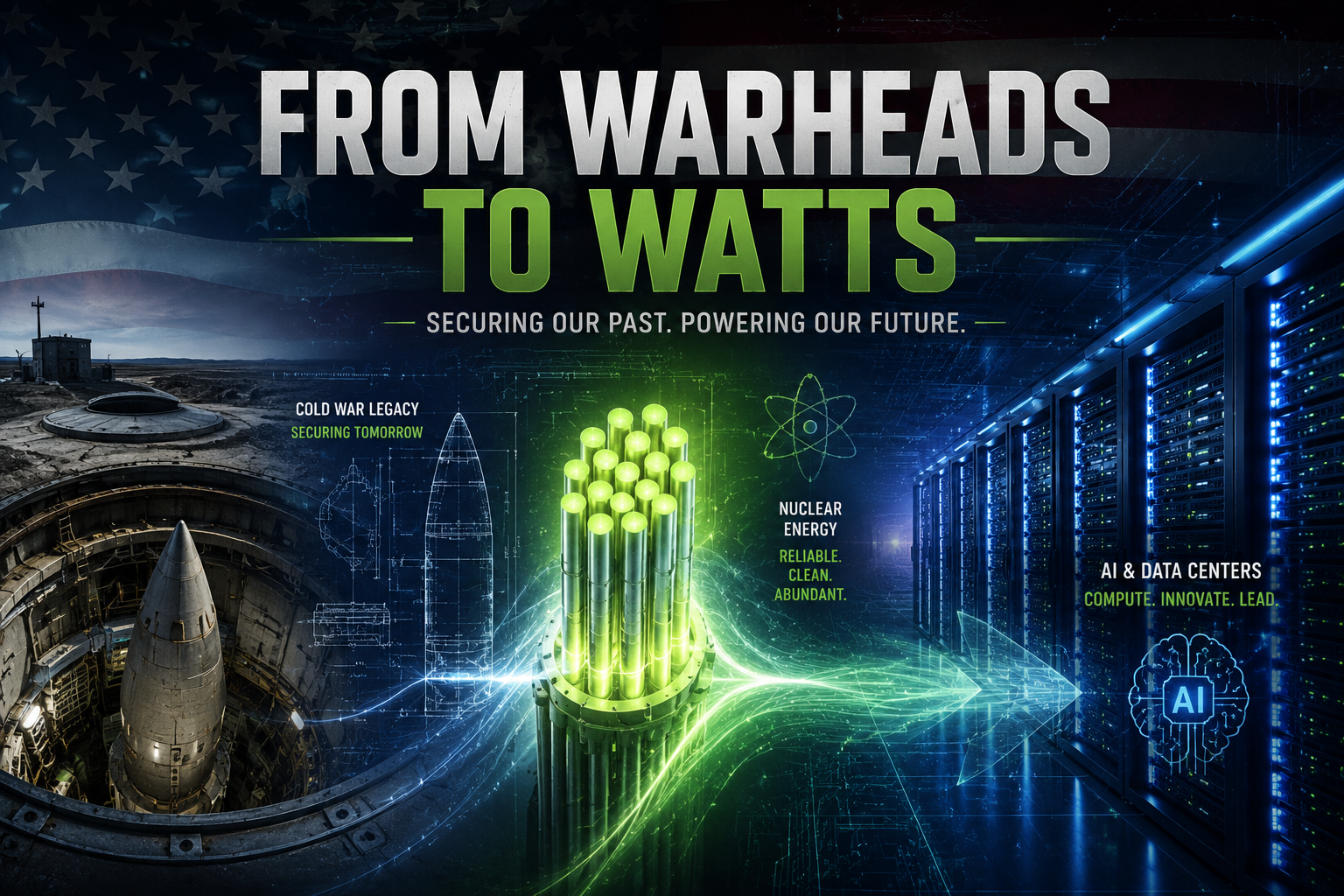
As artificial intelligence reshapes industries and drives a boom in data-center construction, policymakers are increasingly focused on a challenge that could define the next decade: how to generate enough reliable electricity to meet rapidly growing demand.
One proposal now gaining attention involves an unexpected resource—surplus weapons-grade plutonium left over from the Cold War.
The U.S. Department of Energy recently confirmed that five companies have been selected for discussions related to potentially converting approximately 19.7 metric tons of surplus plutonium into commercial nuclear fuel. The material originates from retired nuclear weapons and has long been stored under federal oversight as part of U.S. nonproliferation commitments.
Supporters view the initiative as an opportunity to transform a costly government liability into a strategic energy asset. Critics argue that significant technical, regulatory, and financial hurdles remain before any large-scale deployment becomes feasible.
Why Electricity Demand Is Rising So Quickly
For years, electricity demand in many parts of the United States remained relatively stable. That trend is beginning to change.
The rapid expansion of artificial intelligence, cloud computing, advanced manufacturing, and semiconductor production has triggered a wave of new data-center development across the country. These facilities require enormous amounts of around-the-clock power, placing increasing pressure on existing energy infrastructure.
Unlike intermittent sources such as wind and solar, nuclear power provides continuous baseload generation, making it attractive to utilities and technology companies seeking reliable long-term energy supplies.
As a result, interest in advanced nuclear technologies has accelerated among policymakers, investors, and energy planners.
What Is MOX Fuel?
The proposal centers on converting plutonium into Mixed Oxide (MOX) fuel, a blend of plutonium and uranium that can be used in certain nuclear reactors.
MOX fuel is not a new concept. Several countries, including France and Japan, have explored or utilized versions of the technology as a way to recycle nuclear materials and reduce stockpile burdens.
Advocates argue that repurposing surplus plutonium could:
- Reduce long-term storage costs.
- Extract energy value from existing material.
- Strengthen domestic fuel supply chains.
- Support future reactor deployments.
Supporters also note that converting weapons material into reactor fuel can permanently alter its form, reducing proliferation concerns associated with long-term stockpiling.
The Challenges Facing the Project
While the concept has attracted renewed interest, experts caution that plutonium recycling is neither simple nor inexpensive.
Processing weapons-grade plutonium requires highly specialized facilities, strict security protocols, and extensive regulatory oversight. Previous U.S. efforts involving MOX fuel encountered substantial cost overruns and delays.
Industry analysts point to several obstacles:
- Construction of specialized processing infrastructure.
- Nuclear Regulatory Commission licensing requirements.
- Long project timelines.
- High upfront capital costs.
- Public concerns surrounding nuclear materials.
Some energy experts have described plutonium recycling as a potentially valuable long-term strategy, while emphasizing that it is unlikely to provide immediate relief for current energy shortages.
A Broader Push for Nuclear Expansion
The plutonium initiative is emerging alongside broader efforts to expand America’s nuclear-energy capacity.
Federal agencies, utilities, and private developers are increasingly evaluating advanced reactor technologies, including small modular reactors (SMRs) and next-generation designs intended to be safer, more flexible, and less expensive to build than traditional plants.
Many policymakers argue that maintaining energy leadership will require a diverse mix of power sources, particularly as electricity consumption rises and global competition in AI intensifies.
The growing energy demands of data centers have become a major factor in those discussions, with technology companies actively seeking long-term agreements for nuclear-generated power.
Balancing Security, Innovation, and Energy Needs
The debate surrounding plutonium recycling highlights a broader question facing the United States: how to balance national security responsibilities with future energy requirements.
Supporters see an opportunity to turn legacy Cold War materials into a productive resource while strengthening domestic energy resilience. Skeptics remain concerned about costs, implementation challenges, and the complexity of handling sensitive nuclear materials.
What is clear is that America’s energy landscape is changing rapidly. As AI infrastructure expands and electricity demand climbs, discussions once confined to defense and nuclear policy circles are increasingly becoming part of the nation’s broader economic and technological strategy.
Whether plutonium recycling ultimately becomes a major contributor to the grid remains uncertain, but the proposal reflects the growing urgency surrounding America’s search for reliable, long-term energy solutions in the AI era.
About Republican Column: At Republican Column, we bring you breaking U.S. news, politics, and global developments every day to keep you informed.