

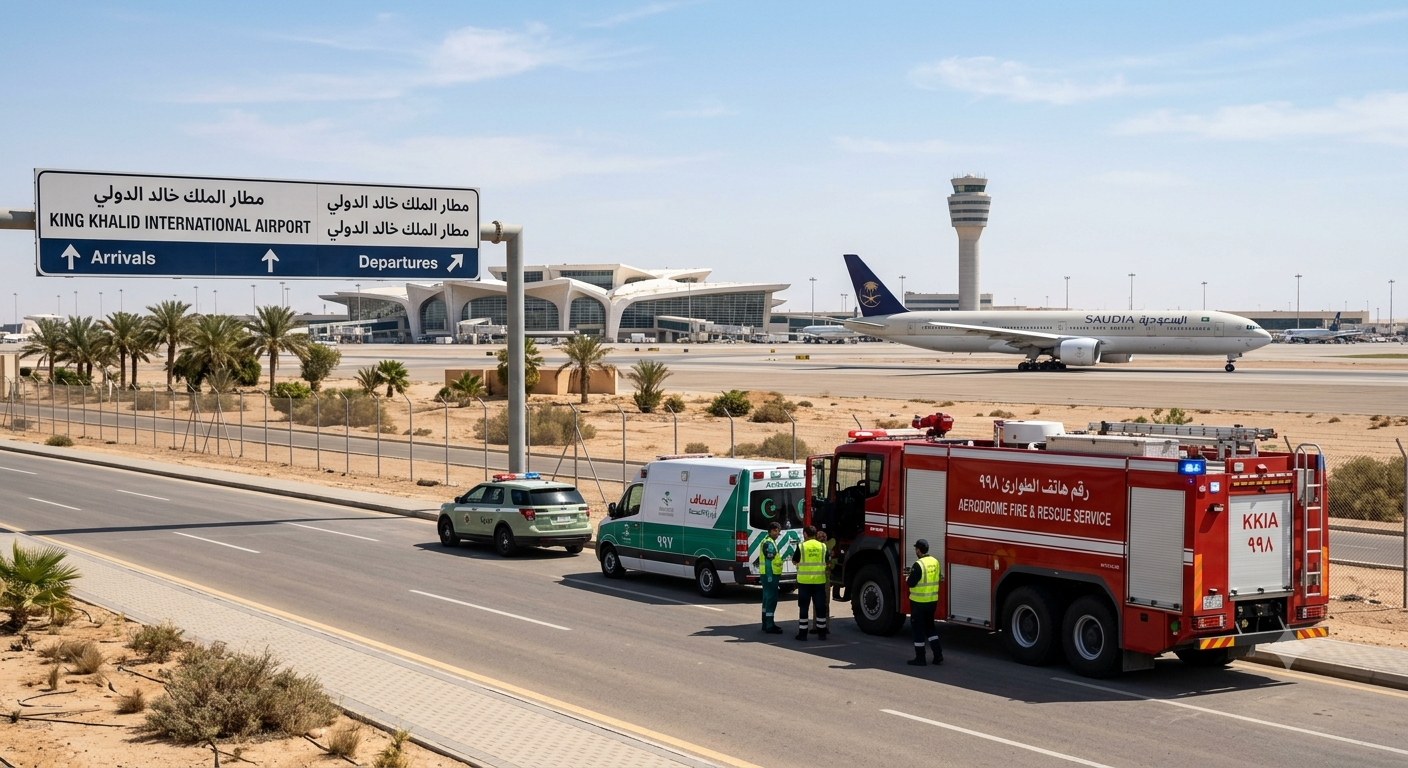
President Donald Trump is considering whether the United States should join Saudi Arabia in military strikes against Yemen’s Houthi movement after a missile attack on Riyadh’s King Khalid International Airport killed 12 people, including an American citizen, and injured more than 300 others.
The October 10 attack marks a dangerous escalation in the widening regional conflict. Saudi authorities said the strike hit the airport complex serving domestic flights, while the Saudi-led coalition blamed the Iran-backed Houthi rebels for the assault. The airport has no military facilities, according to the Associated Press.
Trump indicated that Washington could take part in a military response alongside Riyadh. Speaking after the attack, he said the United States might join the Saudi campaign against the Houthis and that a decision would be made quickly.
The president also said he intended to speak with Saudi Crown Prince Mohammed bin Salman, adding that what happened in Saudi Arabia was “not acceptable.” However, no joint U.S.-Saudi strike against the Houthis had been confirmed in the reporting available on October 11.
The attack has intensified concerns about civilian aviation, Saudi Arabia’s ability to defend its territory, and the possibility that the conflict could draw additional countries into direct military action.
Riyadh Airport Attack Leaves 12 Dead and Hundreds Injured
The missile strike hit the King Khalid International Airport complex in Riyadh, damaging the area housing Terminals 3 and 4, which serve domestic flights. Saudi civil aviation authorities reported 12 fatalities and more than 300 injuries, with some victims in critical condition.
The dead included four Saudi citizens, two Bangladeshi nationals, and one citizen each from the United States, Jordan, Egypt, Syria, Sudan, and Palestine, according to Saudi authorities. The death of an American citizen has added urgency to Washington’s response.
Airport operations were suspended following the attack, and the closure was extended while authorities assessed the damage. Flights were diverted, and several countries issued warnings advising their citizens to avoid the airport.
The strike was the latest in a series of attacks targeting Saudi aviation infrastructure during a sharp increase in fighting between the Saudi-led coalition and Houthi forces in Yemen. Earlier attacks that week killed three Saudis, including a pilot, and damaged a Saudi commercial aircraft on the ground.
The scale of the latest casualties has raised questions about the effectiveness of air defenses and the risks facing civilian facilities as the conflict expands.
Trump Considers Joining Saudi Military Action
Trump’s response leaves open the possibility of a more direct U.S. military role in the conflict.
After the attack, the president said Washington was evaluating whether to join Saudi strikes against the Houthis. He also indicated that he would consult with Crown Prince Mohammed bin Salman before making a decision.
Secretary of State Marco Rubio condemned the attack and confirmed that an American citizen was among those killed. Rubio described the strikes as demonstrating a disregard for innocent civilian life and called for them to stop.
For the Trump administration, the central questions include how to protect American citizens and regional partners, deter further attacks, and avoid an escalation that could threaten additional civilian lives or critical infrastructure.
A decision to join offensive strikes would carry significant consequences. It could increase pressure on Houthi missile and drone capabilities, but it could also prompt further retaliation and expand the conflict across the Arabian Peninsula and Red Sea region.
For now, the administration has signaled that military involvement remains under consideration rather than announcing a final decision.
Why the Houthi Threat Matters Beyond Saudi Arabia
The Houthi movement, also known as Ansar Allah, controls significant territory in Yemen and has developed the ability to threaten targets far beyond its traditional areas of operation.
The group has previously launched missiles and drones toward Saudi territory and attacked commercial shipping in and around the Red Sea. Those operations have raised concerns about the security of international trade routes and the safety of civilian transport.
The Houthis are backed by Iran, although the precise degree of Iranian involvement in individual operations can vary. Their ability to threaten Saudi infrastructure has made the movement an important factor in the wider regional confrontation involving Iran and its rivals.
The renewed fighting follows a period of relative calm after a 2022 ceasefire between Saudi Arabia and the Houthis. Hostilities resumed in July 2026, according to the Associated Press, and have since intensified as Saudi-backed Yemeni forces attempt to reverse Houthi gains.
The airport attack illustrates how renewed fighting in Yemen can affect countries far beyond the immediate battlefield. Disruptions to aviation, threats to shipping, and attacks on infrastructure can carry economic and security consequences throughout the region.
Iran’s Regional Influence and the Question of Deterrence
The latest attack is likely to intensify debate over how the United States and its partners should respond to Iran-backed armed groups.
Supporters of a stronger military response argue that allowing repeated attacks on civilian infrastructure without meaningful consequences risks encouraging further aggression. From this perspective, coordinated action could help restore deterrence and reassure regional partners that attacks on their territory will not be ignored.
Others caution that military strikes can trigger retaliation, increase civilian risks, and make diplomatic solutions harder to achieve. The effectiveness of any operation would depend on its objectives, the targets selected, the strength of Houthi defenses, and the group’s capacity to continue launching attacks.
Iran’s support for the Houthis is an important part of the strategic picture, but the consequences of a U.S. response would depend on the specific operation and how the parties reacted. A wider confrontation is a risk, not an inevitable outcome.
For the Trump administration, the challenge is to demonstrate that attacks on Americans and U.S. partners carry consequences while assessing the potential costs of deeper military involvement.
Civilian Aviation and Regional Security Under Pressure
The attack has also underscored the vulnerability of civilian aviation during regional conflicts. Airports are critical transport hubs, connecting families, businesses, tourists, and international supply chains. Disruptions can affect far more people than those directly caught in an attack.
The Saudi airport strike comes amid broader warnings about the safety of operating in the region. The European Union Aviation Safety Agency has raised concerns about the Houthis’ ability to strike deeper into Saudi territory and the resulting risks to civil aviation. Airlines have also suspended or altered some services amid the escalating threat.
Protecting airports and passengers will require more than a military response. Air-defense readiness, reliable threat warnings, emergency planning, and coordination among regional governments and airlines will all play a role in reducing risks.
The deaths and injuries in Riyadh have made those challenges immediate and difficult to ignore.
What Happens Next?
As of October 11, the United States had not publicly confirmed that it would join Saudi Arabia in offensive strikes against the Houthis. Trump’s comments indicate that the option is being considered, while Saudi officials have vowed a firm response to the airport attack.
The next developments will depend on consultations between Washington and Riyadh, assessments of the threat, and decisions about whether military action would achieve the administration’s objectives.
For the United States, the attack presents a difficult test of deterrence, regional partnership, and escalation management. For Saudi Arabia, it raises urgent questions about defending civilian infrastructure and restoring confidence in air travel.
The immediate priority remains protecting civilians and preventing further attacks. Whether Washington ultimately joins Saudi military operations will help determine the next phase of an increasingly dangerous regional conflict.
Sources & Deep-Dive Verification
- Primary Regional & Defense Reporting:
- The Jerusalem Post / Defense Desk: “How will Saudi Arabia respond to Iran-backed Houthis’ airport attacks?” analysis of regional retaliatory options and civilian infrastructure targeting (October 11, 2026).
- Reuters / Middle East Bureau: “Houthi attack on Saudi airport kills 12, over 300 wounded, authorities say,” wire dispatches on King Khalid International strikes.
- The Daily Star: “Two Bangladeshis among 12 killed in Riyadh airport attack, 300 more injured,” detailing international casualties, hospital mobilizations, and Trump remarks (October 11, 2026).
- Official Statements & Diplomatic Dispatches:
- U.S. Department of State: Statement by Secretary of State Marco Rubio condemning Houthi ballistic missile strikes on Saudi civilian infrastructure.
- Saudi Press Agency (SPA): Coalition joint forces command briefing by Brig. Gen. Turki al-Maliki regarding terminal strikes and response preparations.
About Republican Column: At Republican Column, we bring you breaking U.S. news, politics, and global developments every day to keep you informed.