

A proposed economic and diplomatic framework aims to rebuild Gaza and create long-term stability, but continuing violence, humanitarian needs and political divisions threaten progress.
Efforts to develop a long-term political and economic future for Gaza are entering a difficult phase, with international officials examining whether reconstruction and economic development can help create conditions for lasting stability.
Among those involved in the diplomatic discussion is Jared Kushner, the former White House adviser who played a prominent role in the development of the Abraham Accords during the first Trump administration. His current approach places considerable emphasis on rebuilding infrastructure, encouraging investment and creating economic opportunities alongside security arrangements.
The challenge is that reconstruction cannot easily be separated from the unresolved political and security questions that have shaped Gaza for years.
A Devastated Territory Faces an Enormous Rebuilding Task
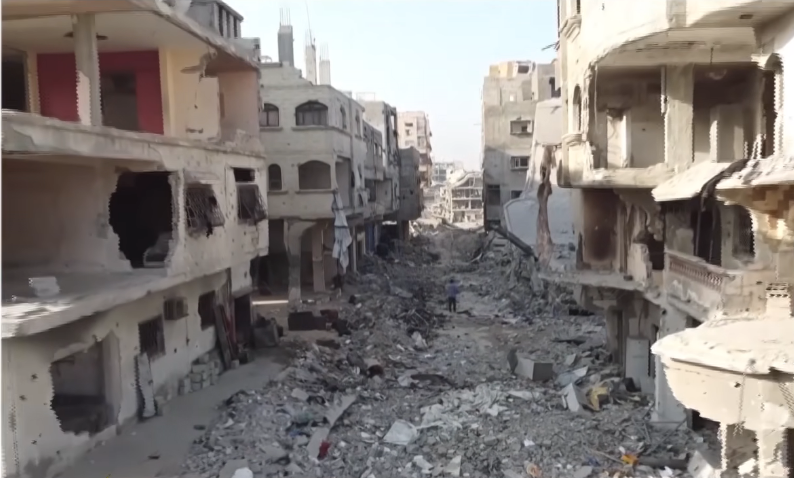
Conditions across Gaza remain extremely difficult.
Large areas have suffered extensive damage to homes and public infrastructure, while displaced families continue to face shortages of shelter, medical services and basic supplies.
Healthcare facilities have also faced enormous pressure. Restrictions on movement, damaged infrastructure and limited medical resources have complicated efforts to provide treatment and transfer seriously ill patients.
For residents, the uncertainty surrounding future security remains one of the biggest obstacles to rebuilding.
A family considering whether to repair a damaged home or reopen a business needs confidence that another round of fighting will not destroy those investments.
That makes security a central component of any reconstruction strategy.
Kushner’s Economic Approach
Kushner’s proposed framework places economic development near the center of the discussion.
The basic premise is that rebuilding Gaza’s infrastructure and creating employment could provide residents with greater economic stability while reducing the conditions that allow militant organizations to maintain influence.
Such a strategy could potentially involve rebuilding housing, electricity networks, water systems, roads, hospitals and commercial infrastructure.
It could also require significant private and international investment.
Supporters of the approach argue that Gaza cannot achieve long-term stability without an economy capable of providing jobs and opportunities for its population.
Critics, however, question whether major investment can succeed without resolving fundamental political and security disputes first.
The Security Question Remains Central
Any reconstruction effort faces the difficult question of who would provide security and govern the territory.
Israel has repeatedly emphasized that preventing armed groups from rebuilding their military capabilities is essential to its security.
Palestinian officials and residents, meanwhile, continue to demand political rights, freedom of movement and a credible path toward self-government.
Reconciling those objectives is one of the most complicated parts of the diplomatic process.
A reconstruction plan may provide money and infrastructure, but neither can substitute for a political framework accepted by the major parties involved.
Political Rhetoric Adds to the Pressure
The diplomatic environment has also been complicated by inflammatory statements from political figures.
Comments advocating expanded military action can make negotiations more difficult and increase fears among civilians that another escalation could occur.
For international mediators, the challenge is to prevent political rhetoric from undermining practical negotiations.
That requires maintaining communication even when public statements from different sides appear fundamentally incompatible.
The Abraham Accords as a Precedent
Kushner’s involvement inevitably brings comparisons with the Abraham Accords, the agreements that normalized relations between Israel and several Arab countries during the first Trump administration.
Those agreements demonstrated that economic interests and diplomatic incentives could help change relationships that had previously appeared resistant to normalization.
Whether a similar model can be applied to Gaza is far less certain.
Gaza’s situation involves a devastating conflict, unresolved questions about governance, the status of militant organizations and the broader Israeli-Palestinian dispute.
The economic and diplomatic conditions are therefore substantially different.
What Reconstruction Would Require
A successful rebuilding effort would likely require cooperation from multiple governments and international organizations.
It would also require reliable funding, transparent administration and mechanisms to ensure that reconstruction resources reach civilian projects.
Infrastructure alone would not be enough.
Businesses need functioning electricity and transportation. Hospitals need equipment and medical supplies. Families need housing and employment. Children need functioning schools.
Perhaps most importantly, residents need confidence that the reconstruction process represents a durable change rather than a temporary pause before another conflict.
A Difficult Road Ahead
The gap between diplomatic plans and conditions on the ground remains enormous.
International officials can design frameworks and announce investment commitments, but implementation depends on security, political cooperation and public acceptance.
For residents of Gaza, the immediate priorities are basic: safety, shelter, medical care, clean water, electricity and a chance to rebuild their lives.
For Israel, preventing another large-scale security threat remains a fundamental concern.
For the international community, the challenge is finding a framework that addresses both realities without allowing either humanitarian needs or security concerns to be ignored.
Kushner’s reconstruction-focused approach therefore represents an ambitious proposal, but not an easy solution.
The coming months will show whether economic development can become part of a broader political settlement—or whether continuing violence and unresolved disputes will once again prevent reconstruction from taking hold.
For now, Gaza remains caught between the enormous need to rebuild and the equally difficult task of establishing the stability required to make rebuilding possible.
About Republican Column: At Republican Column, we bring you breaking U.S. news, politics, and global developments every day to keep you informed.
[…] Gaza fallout renews the case for Trump’s tougher, sovereignty-first approach. […]