

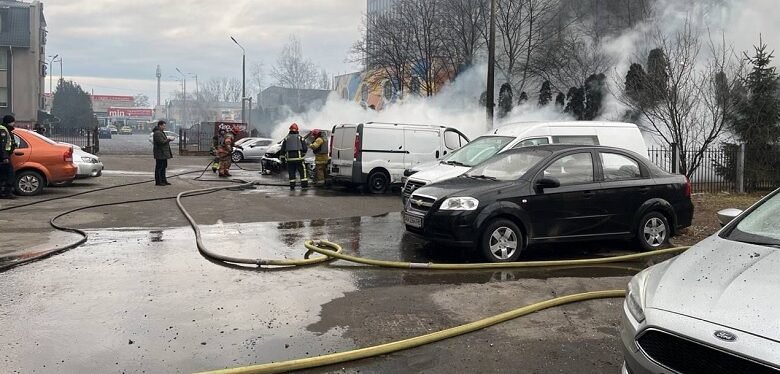
KYIV — A devastating explosion at a reported ammunition storage facility near Kyiv has reignited questions about military logistics, civilian safety and the broader costs of a war that shows little sign of ending.
The circumstances surrounding the blast remain under investigation, including the exact number of casualties, the materials stored at the facility and whether military safety rules were followed. Ukrainian authorities have indicated that possible negligence is being examined.
The incident comes as Washington continues to debate how the United States should approach the conflict.
President Donald Trump has made ending the war a central part of his foreign-policy message, arguing that American power should be used to secure negotiations rather than support an indefinite conflict. His supporters describe that approach as “peace through strength.”
Critics, however, argue that sustained pressure on Russia and continued assistance to Ukraine remain necessary to prevent further aggression.
The explosion near Kyiv has therefore become part of a much larger argument over what happens next.
Questions Over the Storage of Military Supplies
The most immediate issue is the location and security of the facility.
Ammunition depots are inherently dangerous targets during wartime. If a storage site is struck, secondary explosions can dramatically increase the damage beyond the initial impact.
That is why military planners generally attempt to separate ammunition from civilian population centers, use appropriate protective infrastructure and disperse critical supplies whenever possible.
If investigators determine that Ukrainian officials failed to follow established procedures, the consequences could extend beyond the individual facility.
They could raise questions about the effectiveness of Ukraine’s wartime command structure and the systems used to monitor Western-supplied military equipment.
At the same time, investigators will need to establish whether the site was deliberately targeted, what was stored there and whether officials had realistic alternatives given the continuing Russian campaign against Ukrainian logistics.
Those distinctions matter.
Civilian Safety at the Center of the Investigation
For people living nearby, the debate is much less abstract.
A military facility operating close to homes can transform an ordinary neighborhood into a potential danger zone. Residents have little control over where weapons are stored, yet they can face the consequences when those facilities are attacked.
That makes transparency especially important.
Officials should explain why the location was selected, what safety measures were in place and whether warnings or evacuation plans existed.
If negligence is established, accountability should follow.
If procedures were followed, authorities should explain how the facility became vulnerable and what changes will be made to prevent another disaster.
Either outcome requires answers.
The Trump Argument: Strength Should Lead to Negotiations
The incident also fits into an increasingly heated American discussion about Ukraine.
Trump and his supporters have long argued that Washington should avoid open-ended military commitments and use America’s economic and diplomatic leverage to force an eventual settlement.
The argument is rooted in an America First philosophy: American military resources should have clearly defined objectives, foreign assistance should be subject to meaningful oversight, and U.S. policy should avoid unnecessary escalation with nuclear powers.
That position has attracted voters who are concerned about government spending and the possibility that the United States could become increasingly entangled in a conflict it cannot directly control.
Opponents counter that reducing support could weaken Ukraine’s negotiating position and encourage further Russian advances.
The disagreement is unlikely to disappear because of one explosion.
But incidents involving military storage inevitably strengthen demands for greater oversight.
A Wider War of Drones and Long-Range Strikes
The blast also highlights how dramatically warfare has changed.
Drones have become central to attacks against military installations, warehouses, transportation networks and infrastructure. Their relatively low cost allows both sides to conduct attacks at a scale that would have been difficult to sustain using traditional aircraft alone.
Ukraine’s air defenses face the enormous task of protecting cities and critical military infrastructure simultaneously.
Russia, meanwhile, continues searching for vulnerabilities in Ukraine’s defensive network.
That creates a constant logistical challenge.
Even when an incoming attack is intercepted, defending against repeated waves can consume valuable resources. When a strike succeeds, the consequences can be magnified if the target contains ammunition or other hazardous materials.
What Comes Next
The central questions surrounding the Kyiv explosion are now moving toward investigators.
Was the ammunition stored in accordance with Ukrainian regulations?
Were civilians unnecessarily exposed to danger?
What exactly was being kept at the facility?
And were Western-provided weapons or equipment involved?
Clear answers will matter not only to Ukrainian families but also to policymakers in Washington and other countries supporting Ukraine.
For Trump supporters, the incident reinforces a familiar argument: military assistance must never become an excuse for abandoning oversight, and America’s involvement in foreign wars must have a clearly defined purpose.
For supporters of continued aid, the same event may demonstrate why Ukraine needs better protection for its military infrastructure and stronger air defenses.
Between those competing positions lies one point on which there should be little disagreement.
The people living near military facilities deserve protection, taxpayers deserve accountability, and policymakers deserve accurate information before making decisions involving billions of dollars and the possibility of wider escalation.
As the investigation develops, the Kyiv munitions blast may become more than another tragic episode in the war. It could become another test of whether Ukraine’s wartime systems are capable of protecting civilians — and whether Washington’s strategy can ultimately move the conflict toward a lasting peace.
About Republican Column: At Republican Column, we bring you breaking U.S. news, politics, and global developments every day to keep you informed.
[…] on Wednesday, marking the seventh consecutive day of strikes that have disrupted daily life in Kyiv and caused damage in the southern port city of […]