

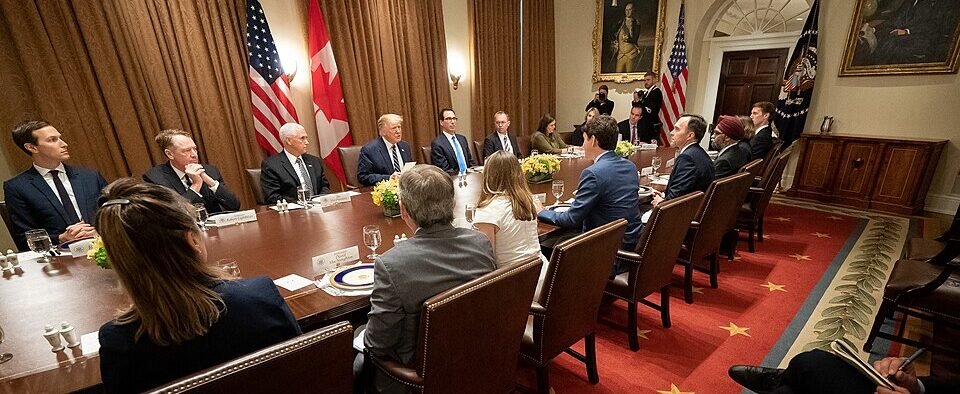
For years, American farmers, steelworkers, and small manufacturers watched Washington sign one lopsided trade deal after another, always told to accept “the cost of doing business” with our neighbors. This weekend, that era ended. After talks between the United States and Canada broke down late Friday night, the Trump administration followed through on its warning and imposed 50 percent tariffs on roughly $20 billion worth of Canadian imports — hitting everything from steel and dairy to wine, furniture, and clothing.
This wasn’t a decision made in anger. It was the result of months of negotiations in which Canada, according to U.S. Trade Representative Jamieson Greer, was offered “the best treatment of any major exporter” to the American market — and still walked away. Greer said Ottawa backed out of terms it had agreed to earlier in the week, introducing new demands at the last minute that upended the deal. That’s not the behavior of a partner negotiating in good faith. That’s a government betting it can outlast American resolve. It shouldn’t.
Carney’s “War” Rhetoric Doesn’t Change the Math
Canadian Prime Minister Mark Carney wasted no time going to the cameras, calling the new tariffs “a miscalculation” and comparing the situation to being “attacked.” He’s promised a “dollar-for-dollar” retaliation starting September 8, targeting American steel, dairy, appliances, agricultural equipment, paper, and electronics.
It’s dramatic language for a trade dispute — and it says more about Ottawa’s anxiety than about Washington’s approach. President Trump summed up the real issue plainly on social media, pointing out that Canada has spent years charging steep tariffs on American farmers while expecting unrestricted access to the U.S. consumer market in return. In his words, Canada wants the benefits of being part of the American economy without any of the responsibilities that come with fair trade.
That imbalance is exactly what these tariffs are designed to correct. The new duties cover about 5 percent of Canada’s total exports to the U.S. — real money, but a fraction of what Canada actually sends south of the border every year. The United States remains, by a wide margin, Canada’s most important customer. Ottawa can posture about sovereignty, but it can’t posture away that dependency.
What Fell Apart — and Why It Matters
According to Carney himself, the sticking points weren’t minor. He said the U.S. pushed for changes to auto tariff structures and pressed for guarantees that Canada wouldn’t hand competitors “exclusive access” to critical minerals America needs. Canada, for its part, offered to walk back some of its own retaliatory measures from last year and let American alcohol back onto store shelves — concessions that sound generous in a press release but don’t touch the structural issues the Trump administration has been raising for years: unfair dairy quotas, non-tariff trade barriers, and a auto supply chain that too often shortchanges U.S. manufacturers.
This is the pattern of every serious Trump trade negotiation. Critics call it reckless. Businesses on both sides of the border understandably worry about short-term disruption. But the administration’s position has been consistent from day one: temporary friction is worth it if it means permanently fairer terms for American industry. Ontario Premier Doug Ford — no ally of the Trump White House — even admitted after Carney’s announcement that the deal on the table would have been bad for Ontario’s auto and steel sectors. If a Canadian premier is saying the offer wasn’t good enough for Canada, it’s a fair bet it wasn’t good enough for America either.
The Bigger Picture
Trade wars make headlines because they’re dramatic, but the underlying strategy here isn’t complicated. President Trump has made clear for a decade that he sees tariffs as leverage, not punishment — a way to force trading partners who’ve grown comfortable with the status quo back to a table where the terms actually reflect economic reality. Canada has now twice seen a deadline pushed back in good faith, twice had extra room to negotiate, and twice come back with terms Washington viewed as insufficient.
Now the tariffs are live, the political theater in Ottawa is in full swing, and Canada’s retaliatory measures are scheduled for September 8. What happens next will depend less on rhetoric than on which side’s economy can absorb the pressure longer — and that has never been a close question. American farmers and manufacturers have waited a long time for a president willing to say plainly that fair trade means fair on both sides of the border. This weekend, they got another reminder that this administration means what it says.
About Republican Column: At Republican Column, we bring you breaking U.S. news, politics, and global developments every day to keep you informed.
[…] President Donald Trump has once again put his America First trade philosophy at the center of Washington’s economic agenda, using a little-known provision of federal law to impose new tariffs on selected Canadian imports. […]