

President Donald Trump is escalating his economic campaign against Iran as the long-running confrontation over Tehran’s nuclear program and the Strait of Hormuz enters another critical phase.
Trump has described the new campaign as an “Economic D-Day,” promising an unprecedented level of financial pressure against Iran and entities that continue to provide the country with economic lifelines.
The strategy marks a renewed emphasis on sanctions and financial isolation at a moment when direct military options carry significant economic and political risks.
The administration’s stated objective is straightforward: pressure Iran into accepting a deal addressing its nuclear program and restoring unrestricted commercial navigation through the Strait of Hormuz.
But whether economic pressure can deliver those results remains uncertain.
Why Hormuz Matters
The Strait of Hormuz is one of the world’s most important energy corridors.
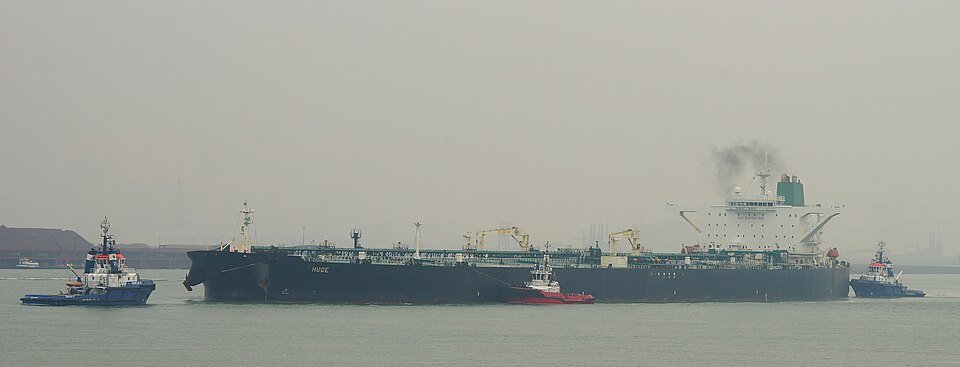
Before the current conflict, roughly one-fifth of global oil and liquefied natural gas shipments passed through the waterway. The disruption has therefore affected far more than the United States and Iran, with consequences for energy prices, shipping costs and economies around the world.
The dispute over the strait has become one of the central issues in the confrontation.
Washington has maintained a naval blockade around Iranian shipping while Trump has insisted that commercial traffic can continue under U.S. security arrangements. Tehran, however, has said the waterway will remain restricted until Washington meets a series of Iranian demands, including sanctions relief and an end to the blockade.
The conflicting claims have created uncertainty for shipping companies and energy markets.
From Military Pressure to Economic Leverage
Trump’s latest strategy places greater emphasis on the financial power of the United States.
The administration is preparing additional sanctions intended to target Iran’s oil trade, financial networks and companies that continue doing business with Tehran.
The White House has also warned countries that assist Iran that they could face consequences for maintaining those economic relationships.
That creates a difficult choice for major trading partners, particularly countries that remain important buyers of Iranian energy.
China is especially significant because of its role in Iran’s oil trade. Any attempt to impose secondary sanctions on Chinese companies could therefore turn the Iran dispute into another source of tension between Washington and Beijing.
Tehran Rejects the Pressure
Iranian officials have publicly rejected Washington’s approach.
Tehran argues that decades of sanctions have already demonstrated the limits of economic pressure and says the latest measures will not force Iran to surrender its negotiating position.
Iranian officials have also threatened retaliation against countries that cooperate with U.S.-led sanctions.
At the same time, Iranian President Masoud Pezeshkian has described a recent memorandum with the United States as a possible route toward ending the conflict and easing the country’s economic crisis. That suggests that, despite the increasingly confrontational rhetoric, diplomacy has not completely disappeared.
Trump Faces a Difficult Test
For Trump, the strategy carries both potential advantages and serious risks.
Economic sanctions allow Washington to apply substantial pressure without immediately expanding direct military operations. Supporters of the administration’s “Peace Through Strength” philosophy argue that American economic power can provide leverage while limiting the need for another prolonged ground conflict.
But sanctions are not an instant solution.
Iran has lived under U.S. economic restrictions for decades and has developed extensive methods for adapting to them. Analysts therefore question whether even tougher sanctions will force Tehran to accept Washington’s demands quickly.
There is also the question of global economic fallout.
If the Hormuz disruption continues, higher energy and transportation costs could feed inflation in countries far removed from the Middle East.
Diplomacy Still Holds the Key
Despite the dramatic language surrounding “Economic D-Day,” the ultimate outcome may still depend on negotiations.
A June memorandum between Washington and Tehran created a temporary framework for addressing the conflict, but the agreement later unraveled over disagreements surrounding the Strait of Hormuz and other issues. The 60-day negotiating period expired without a comprehensive settlement.
Regional governments, including Pakistan and Oman, have continued to play diplomatic roles as officials search for a way to reduce tensions.
That leaves Washington facing a complicated balancing act: maintain enough pressure to preserve leverage while keeping open a pathway toward a negotiated settlement.
What Comes Next
Trump’s economic campaign represents one of the most consequential phases of the Iran confrontation so far.
The administration believes America’s financial power can force Tehran toward a deal. Iran insists it can withstand the pressure.
Meanwhile, businesses, governments and consumers around the world are watching the Strait of Hormuz closely.
The coming weeks will reveal whether Trump’s Economic D-Day becomes a successful negotiating strategy or another chapter in a conflict that has repeatedly resisted quick solutions.
For now, the pressure is rising—but the final outcome remains far from certain.
About Republican Column: At Republican Column, we bring you breaking U.S. news, politics, and global developments every day to keep you informed.