

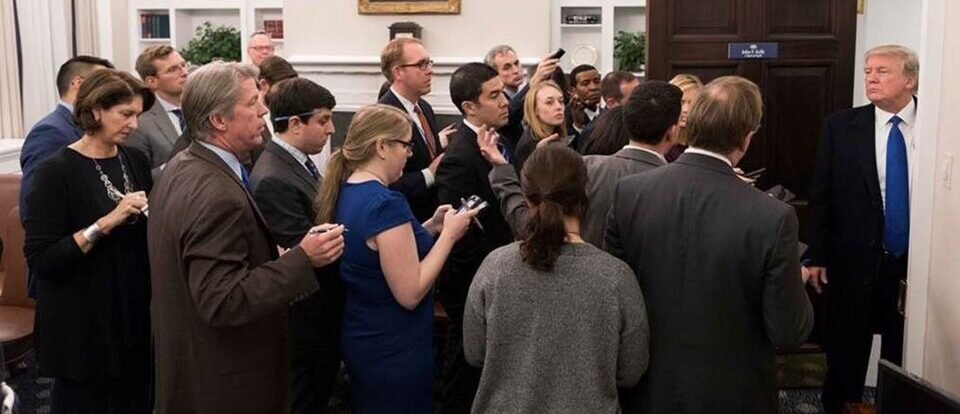
President Trump pushed back on questions about Russia sanctions, arguing that diplomacy and timing were critical to securing the return of an American detainee.
A routine White House press gaggle turned tense as President Donald Trump defended his administration’s approach to Russia, hostage negotiations, and ongoing diplomatic efforts related to Ukraine, sharply disputing suggestions that restraint on sanctions amounted to concessions to Moscow.
President Donald Trump engaged in a heated exchange with a CNN reporter during a White House press gaggle before departing for South Carolina, strongly defending his administration’s diplomatic strategy toward Russia and its handling of negotiations that led to the release of American detainee Steven Hubbard.
The exchange unfolded as reporters questioned the president about a range of foreign policy issues, including Russia sanctions, ongoing diplomatic efforts related to the war in Ukraine, and the administration’s approach to securing the return of Americans detained overseas.
What began as a routine media availability quickly escalated when a reporter challenged Trump on whether withholding or delaying additional sanctions against Russia during negotiations effectively represented a concession to Moscow.
The president rejected that premise, arguing that critics failed to appreciate the realities of high-level diplomacy. Trump maintained that successful negotiations often require flexibility and careful timing, particularly when the objective involves securing the release of American citizens held abroad.
According to the president, imposing new sanctions during active discussions would have complicated or potentially ended the negotiations altogether. He emphasized that Steven Hubbard’s detention originated before his administration and that his team’s priority was bringing the American citizen home safely and as quickly as possible.
Trump argued that diplomacy should be judged by outcomes rather than political optics. He suggested that critics calling for immediate punitive measures were overlooking the practical challenges involved in negotiating with foreign governments on sensitive matters involving detainees and broader geopolitical concerns.
The exchange highlighted a longstanding foreign policy debate in Washington regarding the use of sanctions as a diplomatic tool. Supporters of aggressive sanctions often argue that economic pressure provides leverage against adversarial governments and demonstrates resolve. Others contend that diplomacy sometimes requires preserving communication channels, particularly when negotiations involve human lives or efforts to resolve international conflicts.
Throughout the discussion, Trump repeatedly framed the release of Hubbard as evidence that the strategy worked. He suggested that had sanctions been imposed during the negotiations, the chances of a successful outcome would have been substantially reduced.
Beyond the issue of sanctions, the president also addressed ongoing efforts related to the war in Ukraine. While offering few specific details, Trump indicated that discussions involving the conflict may be moving in a positive direction.
He expressed optimism that diplomatic initiatives could eventually produce progress, stressing that peace negotiations often require patience, discretion, and strategic restraint. Trump argued that public pressure for immediate action does not always align with the realities of delicate international discussions.
The president suggested that maintaining negotiating flexibility can be essential when trying to secure agreements involving multiple countries and competing interests. Although he did not disclose details about any specific talks, he repeatedly emphasized the importance of allowing diplomatic efforts to proceed without unnecessary obstacles.
Questions during the gaggle also touched on Iran and broader Middle East policy. Trump defended actions taken during his previous administration to confront Iranian nuclear ambitions and regional influence, asserting that tougher policies had strengthened American security interests.
He also criticized earlier administrations, arguing that they failed to adequately address growing threats in the region. Trump maintained that a combination of deterrence and strategic diplomacy remains necessary to address challenges involving Iran and other geopolitical adversaries.
As the exchange continued, tensions between the president and the CNN reporter became increasingly apparent. Trump disputed several assumptions underlying the questions and criticized what he described as unfair or misleading media coverage of his foreign policy positions.
After several rounds of questioning, the president moved on to other topics, including domestic political matters and his planned trip to South Carolina. The shift brought an end to one of the more combative moments of the gaggle, but the exchange quickly attracted attention online and among political observers.
The confrontation served as a reminder of the often-contentious relationship between Trump and major news organizations. Throughout his political career, the president has frequently challenged reporters during press conferences, interviews, and informal media availabilities.
Supporters view these confrontations as evidence of Trump’s willingness to defend his policies directly and challenge media narratives. Critics argue that such exchanges can overshadow important policy discussions and contribute to growing political polarization.
Regardless of perspective, the exchange underscored the intense scrutiny surrounding U.S. foreign policy decisions at a time of ongoing international uncertainty. Russia’s relationship with the United States, the conflict in Ukraine, negotiations involving detained Americans, and tensions in the Middle East continue to rank among the most closely watched issues in global politics.
As debates over diplomacy, sanctions, and national security continue, the White House exchange illustrated how deeply divided opinions remain regarding the best approach to advancing American interests while navigating some of the world’s most complex geopolitical challenges.
About Republican Column: At Republican Column, we bring you breaking U.S. news, politics, and global developments every day to keep you informed.