

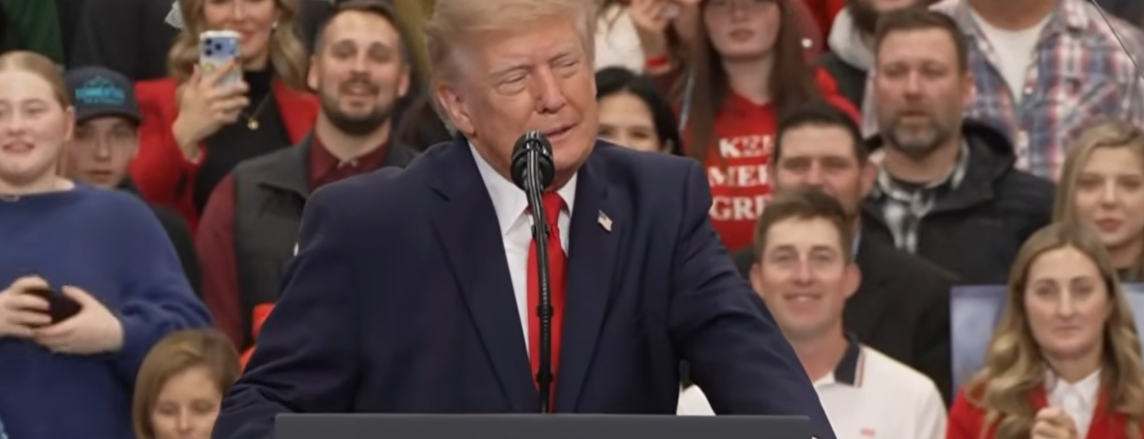
In a political landscape defined by frequent friction between conservative leadership and mainstream media networks, an unexpected moment unfolded on Tuesday. During a high-energy campaign rally, Donald Trump surprised both his supporters and political observers by pausing his remarks to play an on-air segment from CNN that highlighted his commanding approval ratings among Republican voters.
Rather than launching into his usual critiques of network coverage, Trump offered a rare note of appreciation, remarking to the cheering crowd: “Thank you, CNN. That was very nice.”
The unusual sequence of events has sparked conversations across political circles regarding media framing, campaign optics, and the fluid relationship between political figures and television news outlets.
The Rally Disruption: Bringing CNN to the Stage
The moment occurred mid-speech as campaign aides queued up audio and video equipment at the venue. Instead of relying solely on verbal commentary, Trump directed the audience’s attention to large screens to broadcast a portion of a recent CNN news report.
The segment focused on polling data illustrating strong and sustained support for the former president within the Republican Party base. As the figures rolled across the screen, detailing widespread approval among registered GOP voters, the crowd responded with loud applause and cheers.
For followers accustomed to sharp rhetorical battles between political rallies and cable news networks, watching a campaign event deliberately amplify a mainstream news segment—and praise it—marked a distinct shift in tone.
Analyzing the Numbers: The GOP Base Remains Solid
The segment featured on the big screens touched upon a central theme of current political forecasting: the enduring strength of the party’s core base. While national polling often reflects deep partisan polarization and competitive general election dynamics, intra-party metrics frequently tell a different story.
According to the data highlighted in the broadcast, grassroots backing remains heavily consolidated behind Trump. Political analysts note that maintaining high approval numbers among registered Republicans is a vital mechanism for driving primary turnout, consolidating legislative influence, and shaping party platform priorities ahead of upcoming electoral cycles.
By showcasing these figures directly from a network frequently critiqued by his campaign, Trump sought to validate the narrative of a unified and energized party base directly to the people in attendance.
A Calculated Shift in Media Strategy?
Observers have long debated the strategic value of politicians engaging directly with critical media outlets. While traditional campaign playbooks often advise dismissing unfavorable coverage entirely, weaponizing or co-opting favorable moments from mainstream broadcasts can serve a dual purpose.
First, it allows a campaign to bypass partisan echo chambers. When a network traditionally viewed as critical validates a positive metric—such as high voter approval—it can carry a different weight with independent or undecided observers who may view the source as more objective on that specific data point.
Second, the move serves as a masterclass in crowd engagement. By turning a news segment into a live, shared experience within the arena, the campaign transformed passive television viewing into an interactive rally moment. Supporters weren’t just hearing about poll numbers; they were watching mainstream media acknowledge them in real time.
Reactions and Broader Political Implications
As video clips of the rally moment circulated across social media platforms and cable news networks the following morning, reactions varied wildly. Supporters viewed the gesture as a lighthearted and effective reclaiming of mainstream narratives, while critics pointed out that cherry-picking single broadcast segments does not capture the entirety of political coverage or broader national polling trends.
Nevertheless, the incident underscores the evolving nature of political communication in the digital age. Boundaries between primary reporting, campaign production, and social media sharing continue to blur. Whether this moment signals a temporary divergence in standard campaign rhetoric or a broader tactical shift in how political figures interact with television media remains to be seen.
As the race moves forward, moments like these highlight how campaigns constantly look for novel ways to frame their narrative, energize their base, and utilize every available platform—even unexpected ones—to reinforce their message to the electorate.
About Republican Column: At Republican Column, we bring you breaking U.S. news, politics, and global developments every day to keep you informed.