

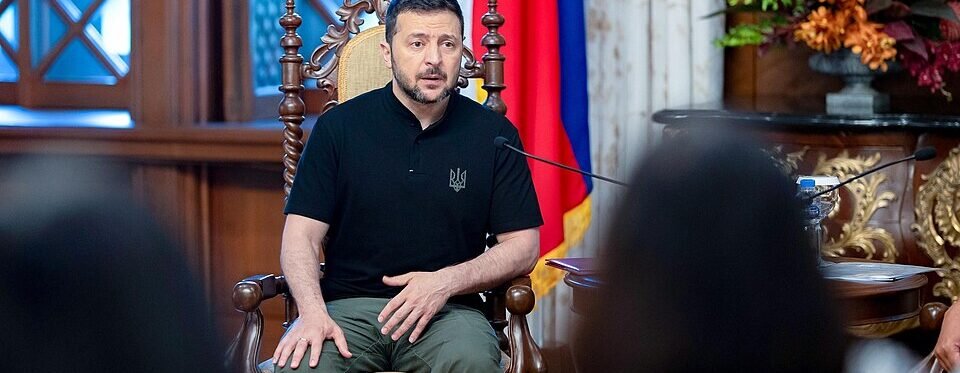
Ukrainian President Volodymyr Zelenskyy used a public discussion at the Hudson Institute to deliver a pointed message to Western allies: economic pressure on Russia must be more consistent, defense cooperation must accelerate, and Europe should take stronger steps to safeguard its long-term security.
During the event, Zelenskyy addressed questions about Europe’s preparedness to face security challenges stemming from the ongoing war in Ukraine. While expressing appreciation for military and financial support provided by international partners since Russia’s invasion, he argued that additional measures are needed to increase pressure on Moscow and reinforce regional stability.
A major focus of Zelenskyy’s remarks was the effectiveness of sanctions imposed on Russia. According to the Ukrainian leader, sanctions have helped limit parts of Russia’s economy, but gaps in enforcement and various exemptions have reduced their overall impact.
He suggested that partial restrictions on specific sectors often allow alternative revenue streams to remain available. In his view, sanctions produce stronger results when applied consistently across industries and maintained over time rather than being weakened or relaxed.
Zelenskyy argued that Europe and its partners should pursue what he described as a comprehensive sanctions strategy. Such an approach, he said, would make it more difficult for Russia to finance military operations and maintain its defense production capacity.
The Ukrainian president also highlighted concerns about international supply chains and the continued availability of foreign-made components used in military equipment. He noted that modern weapons systems often rely on technology and parts manufactured in multiple countries, making export controls and monitoring efforts increasingly important.
According to Zelenskyy, tighter oversight of dual-use technologies, which can serve both civilian and military purposes, could help limit access to components that may ultimately support defense production. He called on governments and private companies to work together to strengthen compliance measures and close potential loopholes.
Beyond economic measures, Zelenskyy emphasized the importance of military preparedness and air defense cooperation among Western allies. He pointed to the continued missile and drone threats faced by Ukrainian cities and infrastructure, arguing that defense support remains critical to protecting civilians and maintaining stability.
The Ukrainian leader compared international responses to security crises in different regions, noting that some allies have received substantial defensive support within short timeframes during periods of heightened tension. While acknowledging the varying circumstances of each conflict, he suggested that Ukraine’s security needs should continue receiving sustained attention from partner nations.
Zelenskyy said that strengthening Ukraine’s defensive capabilities serves a broader purpose beyond the country’s borders. In his view, investments in deterrence and regional security contribute to the overall stability of Europe and help reduce risks associated with future conflicts.
The discussion also touched on the evolving state of European defense readiness. Several European governments have announced increased military spending and expanded defense initiatives since the start of the war. However, debates continue over production capacity, joint procurement programs, and the development of a more coordinated long-term security framework.
Zelenskyy argued that these efforts should continue, stressing that effective deterrence depends not only on financial commitments but also on practical cooperation among allies.
Another topic raised during the event involved China’s role in international diplomacy and its relationship with Russia. Responding to questions about potential diplomatic initiatives, Zelenskyy acknowledged China’s economic influence and its significance as one of Russia’s major trading partners.
He stated that countries with substantial leverage over Moscow could potentially contribute to future diplomatic efforts aimed at ending the conflict. At the same time, he reiterated Kyiv’s position that decisions concerning Ukraine’s territory and sovereignty must involve Ukraine directly.
The Ukrainian president said his government remains open to international dialogue and multilateral discussions intended to support peace efforts. However, he emphasized that any negotiations should respect Ukraine’s independence, territorial integrity, and right to participate in decisions affecting its future.
Analysts and policymakers continue to debate what combination of sanctions, military assistance, diplomacy, and economic measures could help bring the conflict closer to resolution. Zelenskyy’s remarks reflected Ukraine’s ongoing effort to persuade allies that sustained pressure and coordinated action remain necessary.
His appearance at the Washington-based policy forum comes at a time when questions about defense spending, security cooperation, and the future of European stability remain high on the agenda for governments across Europe and North America.
As the war continues, Zelenskyy’s message underscored a broader theme that has become central to Ukraine’s engagement with international partners: long-term security, he argued, will depend on a combination of effective deterrence, coordinated policy decisions, and continued support from allies committed to maintaining stability in the region.
Source: Forbes Breaking News YouTube interview featuring Ukrainian President Volodymyr Zelenskyy at the Hudson Institute.
About Republican Column: At Republican Column, we bring you breaking U.S. news, politics, and global developments every day to keep you informed.