

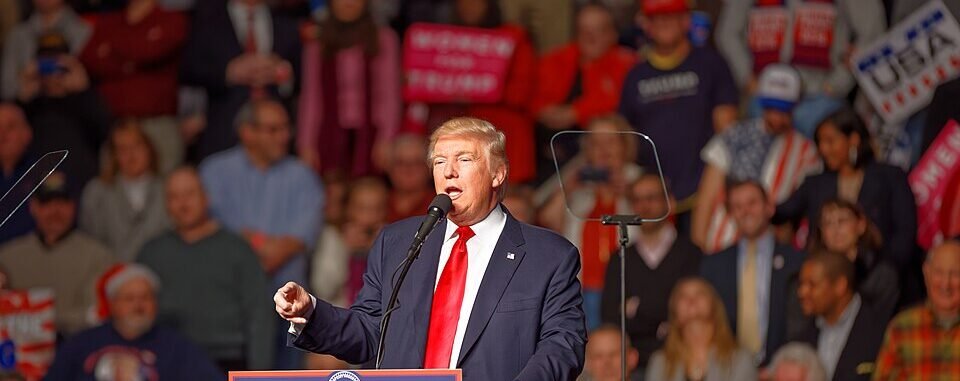
President Donald Trump used a recent speech to highlight economic development projects while accusing congressional Democrats of opposing tax relief, election security measures, and key elements of his policy agenda.
President Donald Trump delivered a wide-ranging political address this week, using the speech to praise what he described as major economic and industrial achievements while launching a forceful critique of Democratic lawmakers and their policy positions.
Speaking before supporters in remarks later circulated by Forbes Breaking News, Trump argued that the United States is experiencing significant growth in manufacturing, technology, and domestic investment. At the same time, he accused Democrats of standing in opposition to policies he says are designed to strengthen the economy, secure the border, and support American workers.
The speech touched on several major political issues, including industrial development, tax policy, election laws, immigration, inflation, energy costs, and cultural debates, reflecting many of the themes that have become central to Trump’s political message.
Emphasis on Manufacturing and Investment
A significant portion of Trump’s remarks focused on economic development and domestic industrial expansion.
The president highlighted investments in manufacturing facilities, automotive production, pharmaceutical development, and emerging technologies. He portrayed these projects as evidence that the United States is becoming more self-reliant and competitive in key industries.
Trump argued that strengthening domestic production is critical for both economic growth and national security. Referencing lessons learned during the COVID-19 pandemic, he stressed the importance of rebuilding pharmaceutical manufacturing capabilities within the United States rather than relying heavily on overseas supply chains.
He pointed to new industrial projects and private-sector investment as signs of momentum in the economy. According to Trump, continued support for manufacturing and technology sectors will be essential for maintaining America’s global competitiveness.
However, he also claimed that these gains could be jeopardized by political opponents. One of the speech’s most memorable lines came when Trump asserted that “the radical left Democrats want to burn it all down,” framing the opposition party as hostile to economic progress and development.
Criticism of Democratic Tax Positions
Tax policy emerged as another major focus of the address.
Trump argued that Democrats have consistently opposed proposals intended to reduce taxes for workers and retirees. He specifically cited measures aimed at reducing or eliminating taxes on tips, overtime pay, and Social Security benefits.
According to Trump, these proposals would provide direct financial assistance to millions of Americans, particularly working-class employees and senior citizens. He contended that Democratic opposition to such measures demonstrates a disconnect between party leadership and everyday voters.
While Trump’s remarks characterized these policies as tax relief efforts that would benefit households across the country, debates over their fiscal impact remain a point of disagreement between Republicans and Democrats. Lawmakers from both parties have continued to argue over how best to balance tax reductions with federal budget priorities.
Election Security Remains a Key Issue
Trump also devoted substantial attention to election laws and voting procedures.
During his remarks, he criticized Democratic opposition to voter identification requirements and measures aimed at verifying citizenship status during the voting process. He argued that such safeguards are necessary to maintain public confidence in elections and ensure electoral integrity.
Election security has remained one of the most contentious issues in American politics in recent years, with Republicans generally advocating for stricter identification and verification standards, while many Democrats have expressed concerns that certain requirements could create barriers to voter participation.
Trump maintained that voter identification measures represent common-sense protections rather than restrictions. He accused opponents of resisting reforms that he believes would make elections more secure and transparent.
Border Security and Economic Concerns
Another central theme of the speech involved immigration and border security.
Trump criticized Democratic lawmakers over their handling of border-related issues, arguing that stronger enforcement measures are needed to address illegal immigration and enhance public safety.
The president also linked economic challenges to broader policy decisions made by Democratic leaders. He pointed to inflation and energy prices as examples of areas where he believes current policies have failed to deliver desired results.
Economic conditions remain a major concern for voters across the political spectrum. Inflation, energy costs, wage growth, and affordability continue to be frequent topics in national political discussions, with both major parties offering competing explanations and solutions.
By tying these issues together, Trump sought to present a broader argument that Democratic governance has contributed to economic strain while Republican policies would provide a stronger pathway for growth.
Cultural Issues Enter the Debate
In the latter part of the speech, Trump turned his attention to cultural and social issues, particularly debates involving transgender participation in sports.
He criticized policies that allow transgender athletes to compete according to their gender identity and argued that such rules can create fairness concerns in women’s athletics. Trump suggested that many Americans support restrictions designed to preserve competitive opportunities for female athletes.
The issue has generated significant debate nationwide, with supporters of inclusion policies arguing they protect the rights of transgender individuals, while critics contend they may create competitive imbalances in certain athletic settings.
As with several other topics addressed in the speech, the discussion highlighted the sharp divisions that continue to shape American political discourse.
Broader Political Significance
Trump’s remarks reflect a campaign-style approach that contrasts his political agenda with that of Democratic lawmakers. By combining economic arguments with concerns about taxation, election procedures, border security, and cultural issues, he presented a comprehensive critique of the opposition party.
Supporters view Trump’s message as a defense of domestic manufacturing, lower taxes, stronger border enforcement, and traditional policy positions. Critics, meanwhile, argue that many of his proposals oversimplify complex challenges and deepen political polarization.
As the national political landscape continues to evolve, speeches like this underscore the stark differences between the competing visions offered by America’s two major political parties. With economic concerns, social issues, and election policy remaining at the forefront of public debate, these divisions are likely to remain central topics in future political campaigns and policy discussions.
For voters, the speech served as another reminder of how sharply contrasting narratives continue to define the nation’s political conversation, with both parties seeking to persuade Americans that their approach offers the better path forward.
About Republican Column: At Republican Column, we bring you breaking U.S. news, politics, and global developments every day to keep you informed.