

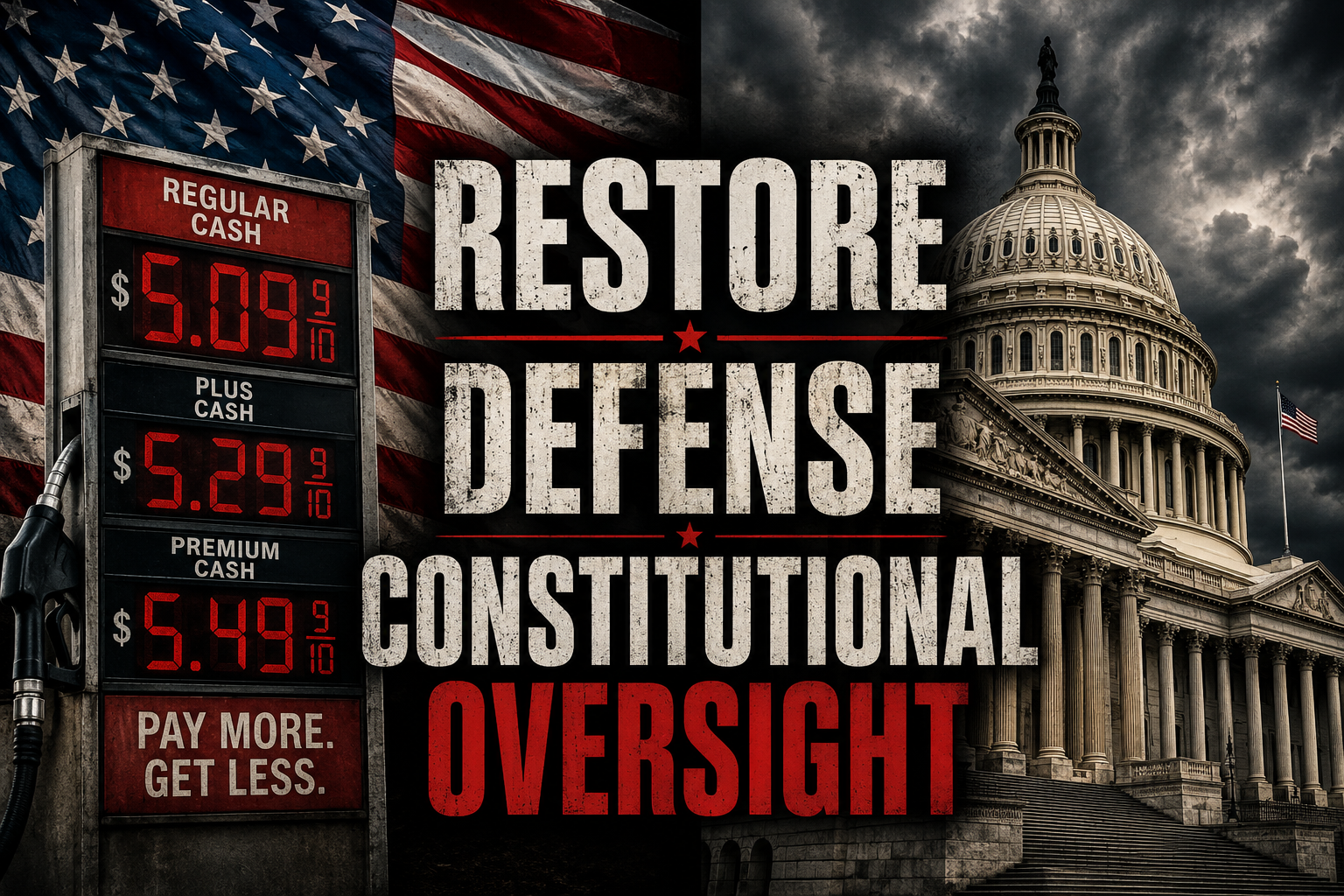
The political establishment wasted little time declaring a Republican civil war after four GOP lawmakers joined Democrats in supporting a House war powers resolution aimed at ending unauthorized military operations against Iran.
The measure passed the House by a narrow 215–208 vote, prompting immediate headlines about a supposed fracture within the Republican Party and a direct challenge to President Donald Trump’s foreign policy approach.
President Trump sharply criticized the resolution, calling it a “meaningless vote” pushed by Democrats during ongoing diplomatic efforts and accusing the four Republicans who supported it of grandstanding.
But beneath the political drama lies a more complicated story—one rooted in constitutional authority, congressional oversight, and a long-running debate within the conservative movement about America’s role in overseas conflicts.
The Four Republicans Who Broke Ranks
The lawmakers who voted for the resolution—Reps. Thomas Massie of Kentucky, Warren Davidson of Ohio, Tom Barrett of Michigan, and Brian Fitzpatrick of Pennsylvania—come from different wings of the Republican Party. Yet all four argued that Congress has a constitutional responsibility to debate and authorize prolonged military engagements.
Rather than framing their vote as opposition to President Trump, each lawmaker pointed to concerns about executive power, military accountability, and the legal framework governing the use of force.
Thomas Massie: Putting American Families First
Massie, one of Congress’s most outspoken fiscal conservatives, argued that foreign conflicts inevitably affect American households.
Speaking after the vote, Massie highlighted the economic consequences that many voters associate with instability in the Middle East, including rising fuel prices and increased costs for agriculture and transportation.
For Massie, the issue was not simply foreign policy—it was whether Washington was adequately considering the economic impact on working Americans already facing affordability challenges.
His position reflects a growing segment of the Republican electorate that favors a more restrained foreign policy while prioritizing domestic economic concerns.
Warren Davidson and Tom Barrett: Veterans Seeking Clear Objectives
For Reps. Warren Davidson and Tom Barrett, both military veterans, the debate centered on mission clarity and congressional accountability.
Barrett questioned whether lawmakers and the public had received sufficient information about long-term objectives, exit strategies, and the scope of military operations.
Davidson echoed similar concerns, arguing that military engagements should follow a straightforward process: define the mission, authorize the mission, and then execute the mission.
Their arguments reflect a view increasingly common among conservatives who support a strong national defense but remain skeptical of open-ended military commitments without clearly defined goals.
Brian Fitzpatrick: Following the Law
Fitzpatrick, a former FBI agent and federal prosecutor, framed his vote primarily as a matter of legal consistency.
He pointed to the War Powers Resolution of 1973, which established requirements for congressional authorization of extended military operations.
According to Fitzpatrick, disagreements over policy should not override the legal framework established by Congress.
His argument was straightforward: if lawmakers believe existing war powers laws are inadequate, they should change those laws rather than ignore them.
A Debate Bigger Than One Vote
While critics portrayed the vote as a rebuke of President Trump, supporters of the four Republicans argue it reflects a broader debate that has existed within the conservative movement for decades.
Many voters who supported Trump’s “America First” agenda have consistently expressed frustration with prolonged overseas conflicts, nation-building efforts, and military interventions that lack clear objectives.
For those conservatives, demanding congressional authorization is not a rejection of strong leadership. Instead, they see it as reinforcing constitutional checks and balances while ensuring greater accountability before committing American resources and personnel abroad.
The Growing Conservative Divide on Foreign Policy
The vote also highlights an ongoing shift within Republican foreign policy thinking.
One faction emphasizes maximum flexibility for presidents during international crises and argues that adversaries benefit when Congress publicly limits executive authority.
Another faction believes that constitutional oversight strengthens America’s position by ensuring military action receives broad political support and clearly defined objectives.
Both sides claim to be acting in the nation’s best interest, but they differ sharply on how military power should be authorized and exercised.
What Comes Next?
Supporters of the resolution argue that Congress should play a larger role in decisions involving prolonged military engagements.
Opponents contend that restricting executive authority during a volatile period could weaken American leverage and complicate ongoing diplomatic efforts.
Regardless of where voters stand, the debate underscores a reality that extends far beyond Iran: many Americans are increasingly demanding greater transparency, accountability, and constitutional clarity when it comes to decisions involving U.S. military action.
The House vote may have generated headlines about division, but it also revealed something deeper—a continuing struggle within Washington over who should ultimately decide when and how America goes to war.
For millions of voters, that question is not merely political. It is constitutional.
Sources & Additional Coverage
Readers interested in reviewing the congressional vote, constitutional questions surrounding war powers, and public statements from lawmakers can explore the following sources:
Congressional Vote & Legislative Background
The Washington Post Politics
Coverage of the House war powers vote, member positions, and the political implications surrounding congressional oversight of military operations involving Iran.
National Archives – War Powers Resolution of 1973
Official text and historical background on the War Powers Resolution, including congressional authorization requirements for extended military engagements.
Congress.gov
Legislative records, bill tracking, roll-call votes, and official congressional documentation related to war powers and military authorization measures.
Statements From Lawmakers
Rep. Thomas Massie
Public statements and policy positions regarding fiscal responsibility, foreign intervention, and congressional authority over military action.
Rep. Warren Davidson
Official comments and updates regarding military authorization, constitutional oversight, and national security policy.
Rep. Tom Barrett
Congressional statements and legislative positions concerning military engagement and national defense.
Rep. Brian Fitzpatrick
Official remarks and policy discussions related to congressional authority, national security, and federal law.
Executive Branch & Public Commentary
Truth Social
Platform where President Donald Trump published public reactions and commentary regarding the House vote and ongoing negotiations involving Iran.
TIME
Reporting and analysis examining the broader political debate over war powers, congressional oversight, and Republican foreign policy divisions.
Further Reading
Congressional Research Service (CRS)
Nonpartisan research and legal analysis covering presidential war powers, congressional authority, and historical precedents involving military operations.
About Republican Column: At Republican Column, we bring you breaking U.S. news, politics, and global developments every day to keep you informed.