

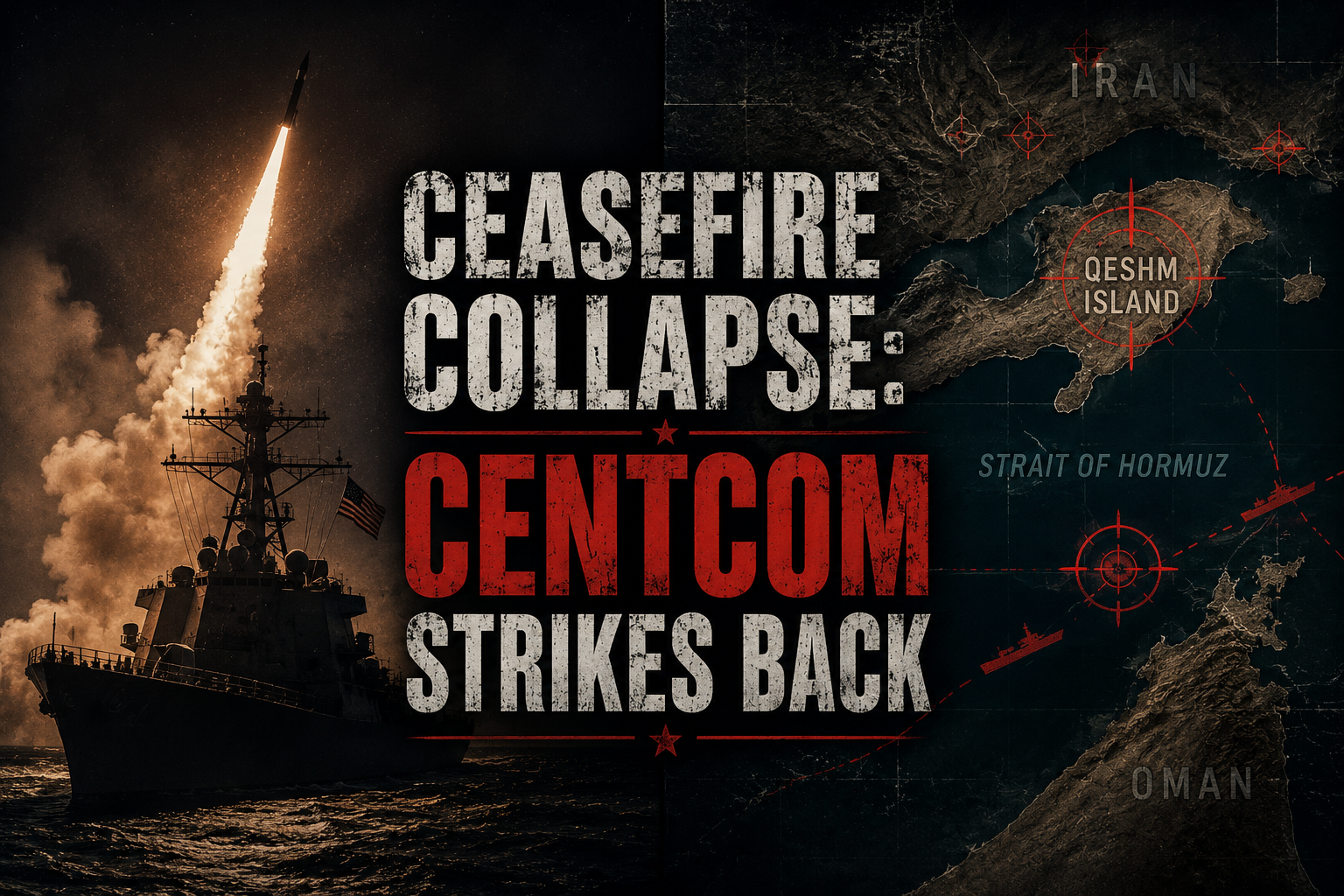
Fresh military activity across the Gulf and Levant is raising new questions about whether recent diplomatic efforts can withstand mounting regional tensions.
Just weeks after diplomats and regional leaders promoted a series of ceasefire agreements aimed at reducing violence across the Middle East, renewed military exchanges are testing the durability of those arrangements.
Reports from regional officials, military statements, and international observers indicate that multiple flashpoints—including the Persian Gulf and southern Lebanon—have experienced new escalations, underscoring the fragile nature of security agreements in one of the world’s most volatile regions.
The developments highlight a recurring challenge that has shaped Middle East policy for decades: reaching a ceasefire is often easier than sustaining one.
Rising Tensions in the Gulf
According to regional reports, Iranian drones and missile launches targeting locations linked to U.S. partners in the Gulf triggered a rapid military response from American and allied defense systems.
Officials reported that several incoming threats were intercepted before reaching their intended targets, while local authorities in the region assessed casualties and infrastructure damage associated with the attacks.
Military analysts say the incidents reflect broader strategic tensions that have intensified in recent months as Iran, the United States, and regional allies continue to navigate an increasingly unstable security environment.
The Strait of Hormuz remains a particular concern.
Roughly one-fifth of the world’s petroleum supply passes through the narrow waterway, making any military activity in the area a matter of international economic significance. Even limited confrontations can have ripple effects across global energy markets and commercial shipping networks.
U.S. Response Signals Continued Deterrence Strategy
Following the attacks, U.S. military forces reportedly conducted retaliatory strikes against facilities linked to Iranian surveillance and military infrastructure.
Defense officials described the operations as targeted responses intended to degrade capabilities associated with drone and missile coordination.
The strikes represent a continuation of a deterrence-focused strategy that seeks to discourage future attacks while avoiding a broader regional conflict.
Administration officials have maintained that the United States remains open to diplomatic engagement but has also emphasized that attacks on American personnel or strategic assets would trigger a forceful response.
The balancing act reflects a familiar challenge for policymakers: demonstrating resolve while avoiding an escalation cycle that could draw multiple regional actors into a wider confrontation.
Lebanon Ceasefire Efforts Under Pressure
At the same time, violence along the Israel-Lebanon border has renewed concerns about the viability of recent diplomatic initiatives.
Reports indicate that armed exchanges involving Hezbollah and Israeli forces continued despite international efforts to reduce tensions.
The situation illustrates one of the core difficulties facing ceasefire negotiations in the region. Agreements reached between governments do not always guarantee compliance from non-state armed groups operating within conflict zones.
As a result, even carefully negotiated arrangements can unravel quickly when conditions on the ground diverge from diplomatic expectations.
Security experts note that ceasefires often serve as temporary stabilizing mechanisms rather than permanent solutions to deeper political and ideological disputes.
Why This Matters
The latest escalation comes at a sensitive moment for regional stability.
Global energy markets remain highly sensitive to developments in the Gulf, while ongoing conflicts in Gaza, Lebanon, Syria, and the Red Sea continue to place pressure on diplomatic efforts throughout the region.
For policymakers, the question is no longer simply whether ceasefires can be negotiated.
The larger challenge is whether they can be maintained amid competing military objectives, regional rivalries, and long-standing political grievances.
History suggests that ceasefires are most successful when they are accompanied by enforcement mechanisms, credible deterrence, and sustained diplomatic engagement.
Without those elements, temporary pauses in fighting can quickly give way to renewed violence.
The Bigger Strategic Debate
The recent developments have reignited debate over the future direction of U.S. policy in the Middle East.
Some analysts argue that stronger military deterrence is necessary to prevent further attacks on allies and strategic infrastructure.
Others contend that long-term stability will ultimately depend on broader diplomatic frameworks capable of addressing the underlying drivers of regional conflict.
What both sides generally agree on is that the current situation remains highly fragile.
As military forces, regional governments, and international mediators assess their next moves, the coming weeks may determine whether recent ceasefire efforts can be salvaged—or whether the region is entering another period of sustained escalation.
Bottom Line
The latest exchanges between Iranian-linked forces, U.S. military assets, and regional actors serve as a reminder that ceasefires are often only the first step toward stability, not the final destination.
While diplomatic channels remain active, renewed military activity across multiple fronts demonstrates how quickly fragile agreements can come under pressure.
For now, the region finds itself at a familiar crossroads: balancing deterrence, diplomacy, and the constant risk that a localized confrontation could evolve into something much larger.
You can review an in-depth journalistic broadcast outlining the technical parameters of the radar site interceptions and the shifting strategic alignments in the Persian Gulf by watching this detailed Fox News Middle East Escalation Analysis
. This segment features on-scene reporting from Dubai breaking down how local allies are responding to the sudden collapse of the regional truce.
Sources & Deep-Dive Verification
Military Operations & Regional Security
U.S. Central Command (CENTCOM) : Official military statements, operational updates, and regional security briefings regarding U.S. activities across the Middle East.
Fox News Live News Bureau : Coverage of military developments, missile interceptions, regional security responses, and evolving U.S.-Iran tensions.
Kuwaiti Ministry of Foreign Affairs : Official government statements, casualty reports, and updates concerning incidents affecting Kuwait and regional security.
Diplomatic Developments & Policy Analysis
U.S. Department of State : Briefings, diplomatic updates, and official statements regarding ceasefire negotiations and regional conflict management efforts.
White House Briefing Room : Presidential remarks, policy statements, and administration assessments related to Middle East security and U.S. strategic objectives.
About Republican Column: At Republican Column, we bring you breaking U.S. news, politics, and global developments every day to keep you informed.